Your demo strategy looks bulletproof on paper. Polished slide decks, comprehensive feature walkthroughs, and sales teams armed with talking points that hit every use case. Your prospects are still asking for "more time to think about it."
You can perfect your pitch, nail the discovery, and still watch deals slip away because your demo didn't stick. It's like preparing a Michelin-star meal and then serving it as a photograph. Technically accurate. Completely unsatisfying.
.png)
Why Static Demos Fail
Most SaaS companies treat demos like feature showcases. They optimize for completeness instead of engagement, missing the psychological triggers that actually drive purchase decisions.

.png)
The result of static demos? Longer sales cycles. Higher acquisition costs. Prospects who ghost after seemingly great conversations.
You end up with a beautifully crafted presentation that never becomes a buying experience.
From Static Slides to Interactive Experiences
The shift is simple in concept, hard in execution: stop showing and start letting people do. Companies like Lattice have built entire interactive tour centers where prospects can click through the actual product experience. Vitally created a demo center with feature-specific tours that let users explore at their own pace.
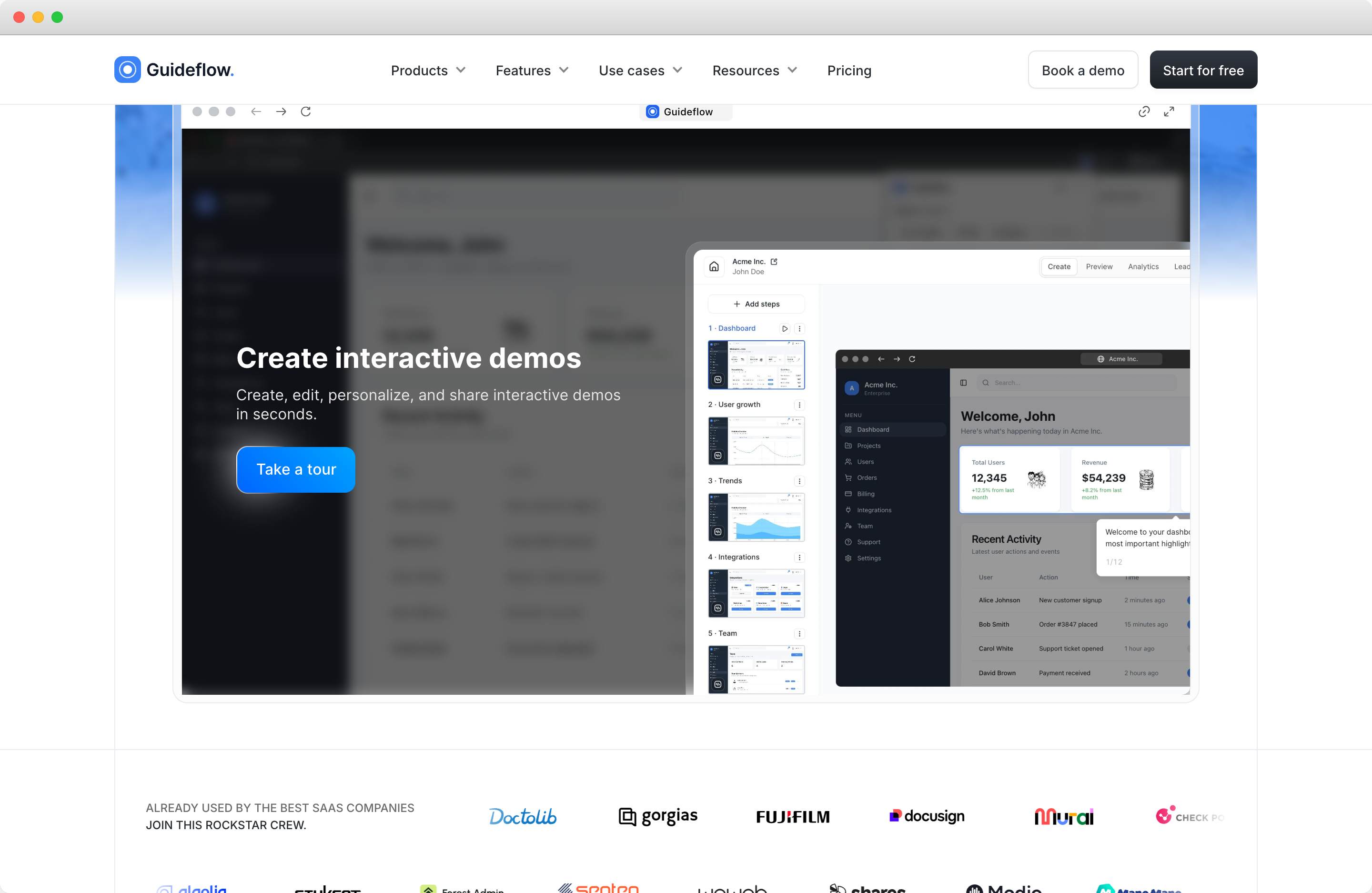
We've seen this play out with our own partners. When we started working with Guideflow, an interactive demo platform themselves, we saw firsthand how powerful this approach is. Their entire business exists because static demos are fundamentally broken.

The Interactive Demo Playbook
Think about the companies that nail engagement. Netflix auto-plays trailers that pull you in. Spotify creates personalized playlists that demonstrate value. Figma drops you into a live workspace the moment you sign up.
So how did you end up with a 47-slide deck and a prayer? Here's what actually drives results:
What We Learned From Our Partners
Working with partners like Feathery taught us that content itself can be a demo. When your blog post lets readers build actual forms instead of reading about form-building, engagement compounds.
We helped Feathery achieve 300% organic growth in 16 months, and interactive content played a significant role in converting that traffic.

With Hutte, a Salesforce DevOps platform where Vlad served as CRO, the challenge was different. Complex technical product, hard to explain in traditional demos.
Teams were spending 45 minutes walking through features while prospects mentally checked out at minute 12. The fix? Replace feature tours with hands-on sandbox experiences. Swap technical explanations for interactive problem-solving scenarios. Turn presentations into collaborative discovery sessions.
The Mistakes That Kill Demos
After years of watching SaaS companies demo their products, we've identified the patterns that consistently kill conversions:
Interactive Scales Better Than You Think
Here's what we wish more SaaS companies understood: good interactive demos work 24/7 across every touchpoint. They don't need a sales rep to schedule them. They don't need a timezone to align. They don't get nervous before big accounts.
Rebuilding demo strategies for partners taught us that interaction beats information every single time. If your demos are still static, you're leaving conversions on the table, and your competitors who've figured this out are picking them up.
Want demos that actually convert? Let's talk about building interactive experiences that earn premium pricing.