.png)
Most marketers treat them interchangeably. "We got mentioned on TechCrunch" and "we got a backlink from TechCrunch" land in the same Slack channel with the same celebration emoji.
But they do fundamentally different things. And the gap between them is widening every quarter.
For twenty years, the off-page playbook was simple: get links, build authority, rank higher. That playbook still works for the part of search that still runs on PageRank logic.
But there's a second layer now. AI search engines like ChatGPT and Google AI Mode don't evaluate your brand the way Google's traditional algorithm does. They don't check whether a link is dofollow. They check whether your brand shows up in the right contexts, on the right sources, frequently enough to be considered relevant.
That distinction changes everything about how you spend your off-page budget.
According to a 2025 SE Ranking study, AI traffic grew 7x year over year, jumping from 0.02% to 0.15% of all internet traffic. It's still a fraction of organic search, but the trajectory is undeniable. The brands that position themselves now are the ones AI engines will default to later.
Backlinks Haven't Retired (They Just Got Roommates)
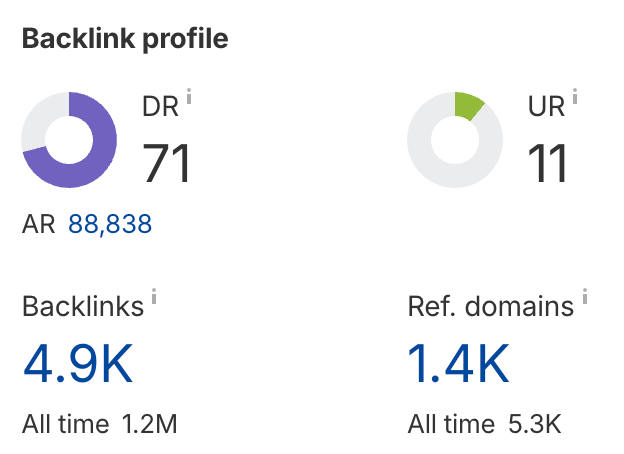
Let's be clear upfront: backlinks still matter. Domain Rating is real. Crawl equity is real. Referral traffic from a well-placed link on a DR 70 blog is real. None of that has changed.

.png)
We saw this firsthand with wecantrack. Over three years, we helped them grow from DR 55 to DR 70 and increase traffic by 25X. That kind of growth doesn't happen without a serious backlink foundation. The links did their job.
With flair, we built over 500 DR40+ backlinks across three years. The result? 1,600% organic traffic growth. That's not a rounding error. That's the compound effect of sustained link building done with intent and precision.
The problem isn't that backlinks stopped working. It's that most teams stopped there. They treated backlinks as the entire off-page strategy, when backlinks are now just one half of it.
Mentions Are Not Failed Backlinks
Here's where most marketing teams get it wrong: they treat an unlinked mention as a failed backlink. As if someone was supposed to link to you but forgot. "Oh, they mentioned us but didn't link. Can we email them and ask for the link?"

AI engines look at where your brand appears, what it's discussed alongside, and how frequently it shows up across trusted sources.
A mention of your brand in a thoughtful comparison article on a niche SaaS review site? That's a signal. A mention in a Reddit thread with 200 upvotes where someone recommends your product? That's a stronger signal. Neither of those needs a hyperlink to influence what an AI engine recommends.
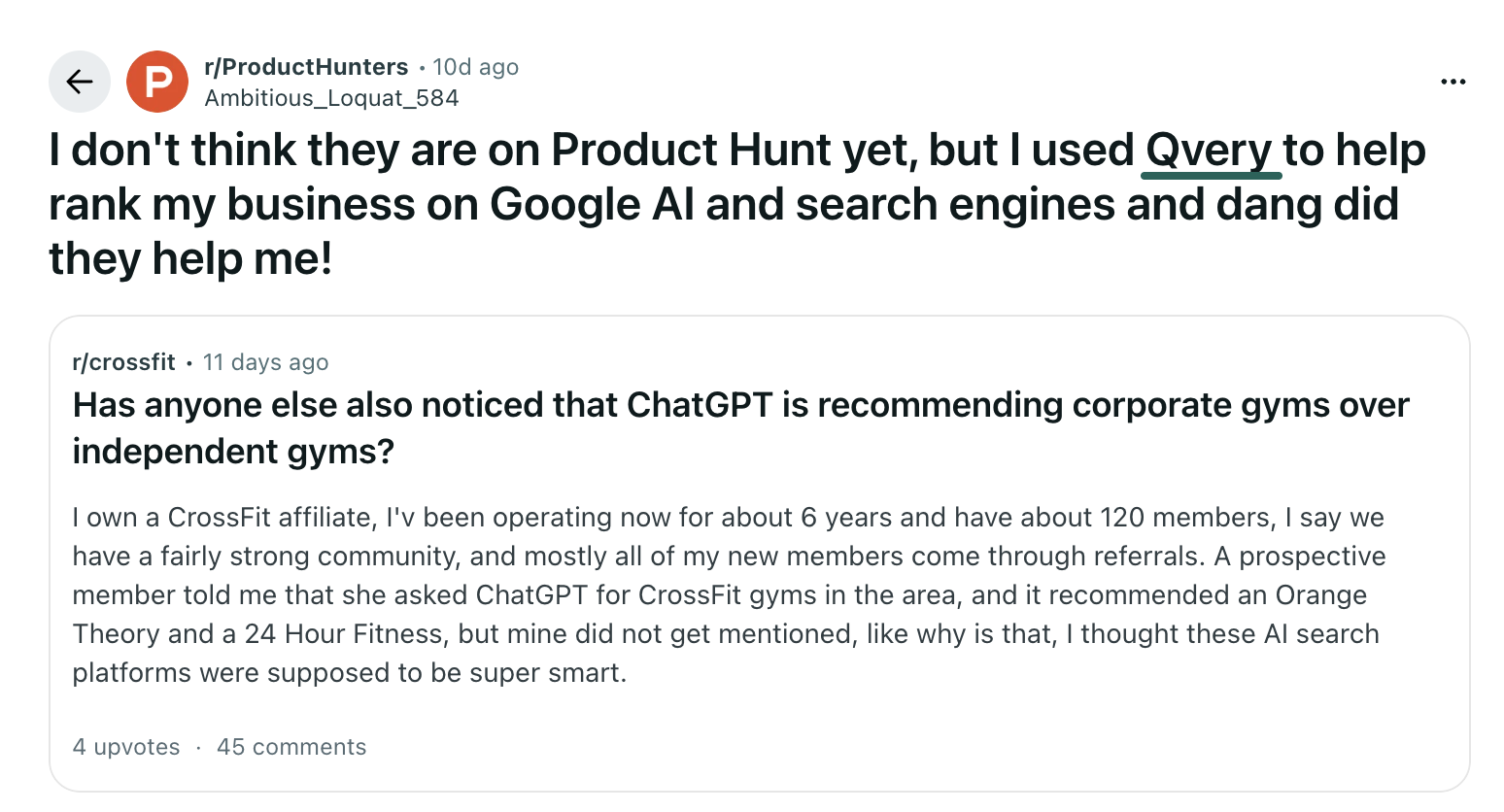
This is backed by data. A Profound analysis of over 4 billion AI citations found that Reddit is the single most cited domain when you aggregate across ChatGPT, Google AI Overviews, and Perplexity. Not because Reddit has great backlinks. Because it has authentic, contextual conversations about real products.
Mentions are their own category of off-page signal. Treating them as lesser backlinks is like treating podcasts as lesser radio shows. Technically related. Completely different in how they create value.
AI Engines Read the Room, Not the Link Tag
Traditional search worked like an accounting system. Every link was a ledger entry. Dofollow added credit, nofollow didn't. Neat, countable, and gameable (which is exactly why Google had to build Penguin in the first place).

This is why some partners with modest backlink profiles are showing up prominently in AI-generated answers, while others with impressive DR scores are functionally invisible.
The DR 80 brand that never got mentioned in comparison articles, listicles, or community discussions? ChatGPT doesn't know it exists in any useful context.
A 2025 Airops study found that brands are 6.5x more likely to be cited through third-party sources than their own domains. That means your visibility in AI answers depends more on what other people say about you than what you say about yourself.
We've seen this pattern repeatedly across partner campaigns. The brands that invested in getting mentioned, not just linked to but talked about, in the right places started appearing in AI answers within months.
The brands that only chased links? Still waiting.
Not All Mentions Are Created Equal
Here's the part nobody talks about at conferences: mention quality varies enormously. Getting mentioned on a random blog that publishes three SEO-optimized listicles per day is not the same as getting mentioned in a well-researched article on a domain that AI engines actually reference.
The sources that tend to carry the most AI citation weight share a few characteristics:
The practical implication: you need to know where AI engines actually pull their information before you decide where to invest your mention-building efforts.
Spraying mentions across a hundred random domains is the off-page equivalent of putting your business card in every fishbowl at every restaurant in town. Technically it's "outreach." Practically it's a waste of your team's Tuesday.
Where Your Off-Page Budget Should Go Now
If you're spending 100% of your off-page budget on link building, you're optimizing for one search paradigm while ignoring the one that's growing fastest.
Here's what a balanced off-page investment looks like in 2026:
With KKday, their Reddit presence generated over 3 million views and 4,000+ upvotes. Those weren't backlinks. They were brand mentions in authentic discussions. Exactly the type of signal that AI engines weigh heavily when deciding what to recommend.
The cost per mention was a fraction of what a traditional link-building campaign would have run.
The window here is real. AI-driven search is not a future trend. It's the current trajectory. Every month that passes without a mention strategy is a month your competitors are building presence you'll need to outpace later.
So What Do You Actually Do on Monday Morning?
Start by auditing where your brand currently gets mentioned versus where it gets linked. Most teams track backlinks religiously and mentions not at all. Flip that ratio.
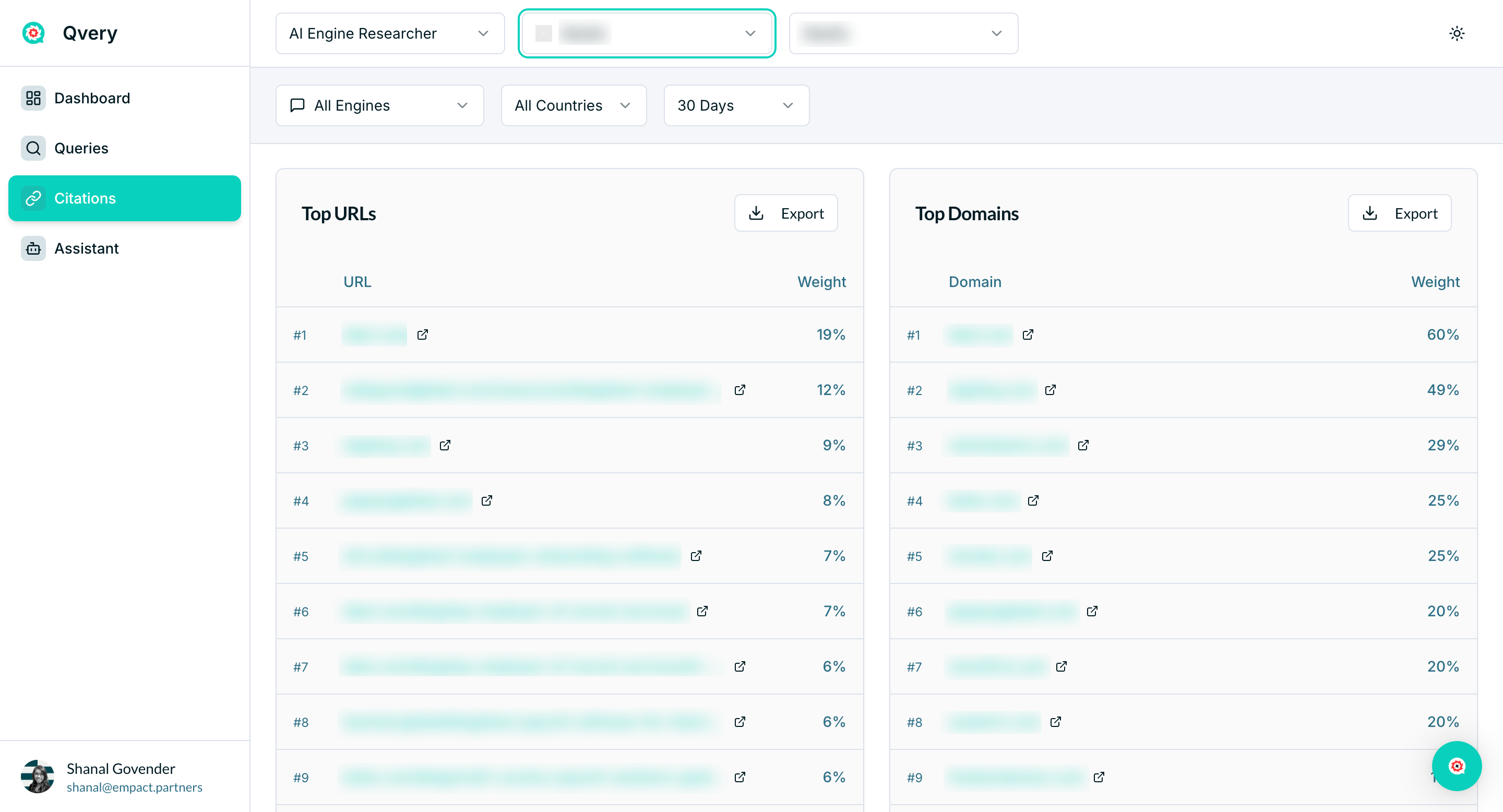
Use AI visibility tools to identify which sources carry the most citation weight in your category. Then build a targeted mention strategy for those sources specifically.
Keep your link-building program running. It's still doing real work for your DR and organic traffic. But stop treating it as your entire off-page strategy.
The brands that win the next phase of search will be the ones that understood the difference between authority and presence, and invested in both.
We help SaaS partners build the backlink foundation that maintains DR and the mention strategy that builds AI visibility. If your off-page budget is 100% links and 0% mentions, let's fix that.