
AI Tool · AI Agents
Competitor Research Agent
A comparison of your website with one competitor’s reaches your work email with a ranked plan. Differences backed by evidence stand apart from assumptions.


A rival’s homepage cannot settle a product comparison.
A homepage shows what a rival wants buyers to believe. Sellers who prepare from that pitch answer it in their own words, so a buyer can hear one comparison from your first rep and another from the next, with neither checked against the rival’s product.
When a rival’s homepage leaves a feature out, an AI chat can report it missing. We check the rival’s own product pages before a partner’s seller tells a buyer the rival lacks it.

Shanal Govender
Senior GTM Consultant @ Empact Partners

We compare both offers where a buyer would look.
Product pages and published customer stories come first, since that is where a pitch gets tested. Answers from ChatGPT and Google AI Mode about the rival count as what buyers hear, never as proof, and anything we only infer is marked as an assumption to test.
We look up the searches where you and the rival both rank and note who comes first on each. That is where a buyer meets the two of you side by side, before any seller is on a call.

Leon Claassen
Senior GTM Consultant @ Empact Partners


We pick the differences your sellers lead with.
Our consultants run the same agent on the rivals your buyers name most on sales calls, and we agree with you which verified differences your sellers lead with. Let’s partner so a buyer hears the same comparison from each rep.
Every difference we give a partner’s sellers comes with a passage from each company’s site that shows it. A buyer who checks either site after the call finds what the seller told them.

Sharné McDonald
Senior GTM Consultant @ Empact Partners
CORE TEAM
Meet Our AI Consultants

Leon Claassen
Senior GTM Consultant
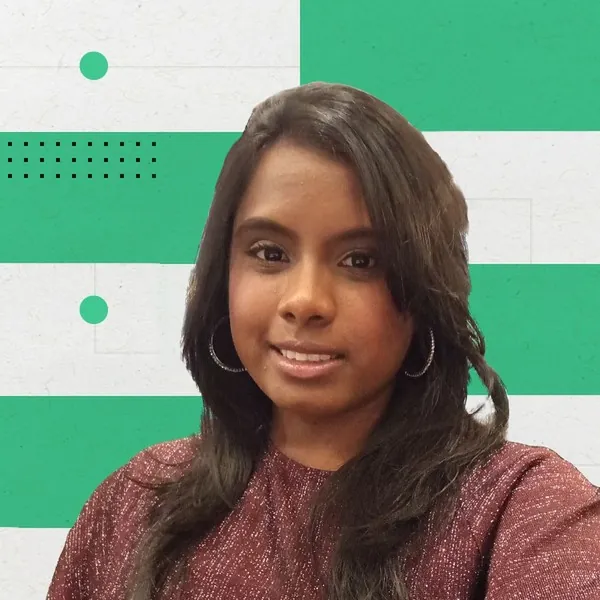
Shanal Govender
Senior GTM Consultant
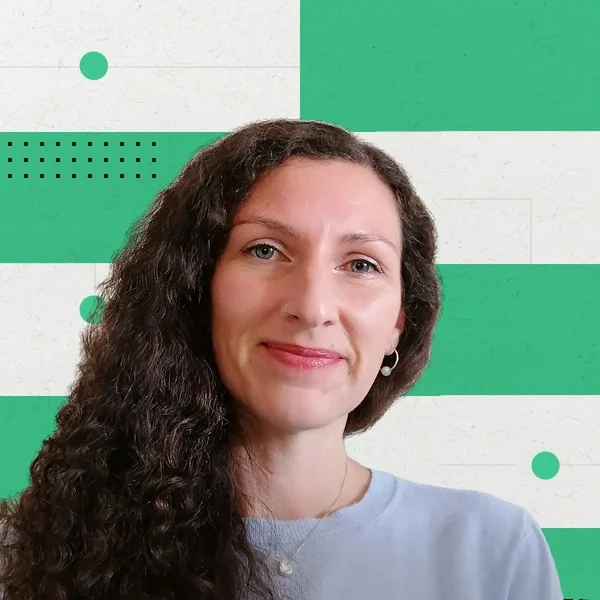
Sharné McDonald
Senior GTM Consultant
Frequently Asked Questions
What does the Competitor Research Agent compare?
Your offer against one competitor you choose, using public evidence. It reads the rival's positioning, product pages and published proof, samples the searches in your category where data exists and asks ChatGPT and Google AI Mode how they describe the rival. Every difference is marked as observed or assumed, and a ranked plan of five to ten actions for your positioning comes last. If an engine contradicts a fact the agent read on the rival's own pages, the report flags it.
What does the Competitor Research Agent need?
Send your website, your competitor's website and a work email. Pick the rival your sales team hears about most, since that is where the comparison will be used. The form only takes company addresses.
Why compare on public evidence?
Because your team's view of a rival is usually made of stories from lost deals, and each person tells a different one. Public evidence is what buyers see too: the rival's own pages, its proof and what AI engines say about it.It also gives your product team a clearer view of where the rival invests.
What does observed versus assumed mean?
Observed differences are ones the agent saw on the pages it read, such as a feature the rival names and you do not. Assumed differences are inferences, such as a likely target customer read between the lines. The report labels each one, so nobody mistakes a guess for a fact in a sales conversation. The assumptions are still useful, as questions to test with customers and prospects. Site observations, search rows and AI descriptions are kept visibly apart, so you always know where a point came from.
Why include how AI engines describe the rival?
Because buyers increasingly ask ChatGPT about a vendor before they visit its site. If the engines describe your rival more clearly or more favourably than you, that shapes the shortlist before your team gets a chance. The report quotes what both engines said, dated. When the engines get the rival wrong, that can be an opening for you too.
What search evidence do you include?
Where search data is available, a sample of the searches in your category and how each company shows up for them. It is a sample, not a full share-of-search study, and the report says what it covered. The check passes with at least ten relevant keyword rows, and fewer are shown as a thinner sample. For a full view of AI answers in your category, the AI Visibility Report is the right tool. Search data shows where each company puts its effort, which is often different from what its homepage says.
Does it tell us how many deals we will win?
No. It compares what both companies publish and makes no claim about sales outcomes, private customer data or who will win. What it gives you is a clearer picture of where you look stronger or weaker to a buyer reading both sites. Lost-deal notes from your own CRM are the best companion to it. Customer evidence from the rival's pages is shown without customer names or deal amounts, and prices are never printed.
Should we research a rival or tear down its pages?
The Teardown stays with the words on up to eight pages a side: claims, proof, tone and buying signals. The Research Agent goes wider, adding product evidence, search data and what AI engines say. Use the Teardown to rewrite your pages, and the Research Agent to understand the rival.
How is the competitor report delivered?
By email. Vlad Shvets, our founder, sends you a link to the PDF on Google Drive, and you can forward that link to anyone on your team.
Why is the Competitor Research Agent free?
Rivals rewrite their pitch all the time, so for partners our agent redoes this research on the rivals named most in sales calls. We then update the partner's comparison pages and sales notes to match. The free report is one run of that research on the rival you choose.
Can we run it on more than one rival?
Each run covers one rival, so run it again for the next one. To keep an eye on several rivals at once, the Competitor Monitoring Agent sends a digest of their recent changes. Running the same rival again in a few months shows how its pitch has moved.
How do we use the competitor findings in sales?
Share the observed differences with your sales team first, since those are safe to use on calls. Then work through the positioning plan, starting with the gaps a buyer would notice soonest. If you want our team to keep your comparison pages current, book a call with Vlad. Keep the assumed differences as questions for your next customer interviews.
Ready
To Connect?
Let's Partner