A head of finance at a 300-person company types “why shouldn’t I use” and your product’s name into ChatGPT on a Tuesday morning, two months before anyone on your team learns her name. The answer comes back in three tidy bullets:
The sources underneath are two competitor comparison pages, a review site, and your own pricing page, quoted without any of the context you’d have given it. She asks Perplexity the same question and gets the same three bullets, different sources, and still nothing you wrote to answer it. She shortlists two of your competitors and closes the tab.
Your competitor has already published your “why not” page. So has G2, and so has Reddit. This week, we asked two AI engines that question, in two wordings, about six of the best-known SaaS brands, and one of them cited the brand zero times in 120 sources.
To answer “why not you?” in public, do two things in this order:
I’m a Senior GTM Consultant at Empact Partners. Empact Partners runs go-to-market work for SaaS companies as part of their own marketing teams, and deciding what a company says about itself, including what it’s bad at, is the Brand Marketing workstream we run. Competitor comparison pages are where that work now gets decided, usually by someone else.
Your Competitor Already Wrote Your “Why Not” Page
For six well-known SaaS brands, the brand itself owned 0 of the 60 top-ten Google results for its own “alternatives” search, the kind a buyer types as “HubSpot alternatives.” Other software companies owned 31 of them, and the AI Overviews sitting on top of those same results cited the brand zero times.
We ran the searches ourselves on October 2, 2026: each brand’s name plus “alternatives,” and each brand against its main rival, such as “HubSpot vs Salesforce,” for HubSpot, Asana, Mailchimp, Mixpanel, Zendesk, and Notion, Google in the US, desktop, the first ten organic results each, every result sorted by who owns the page.
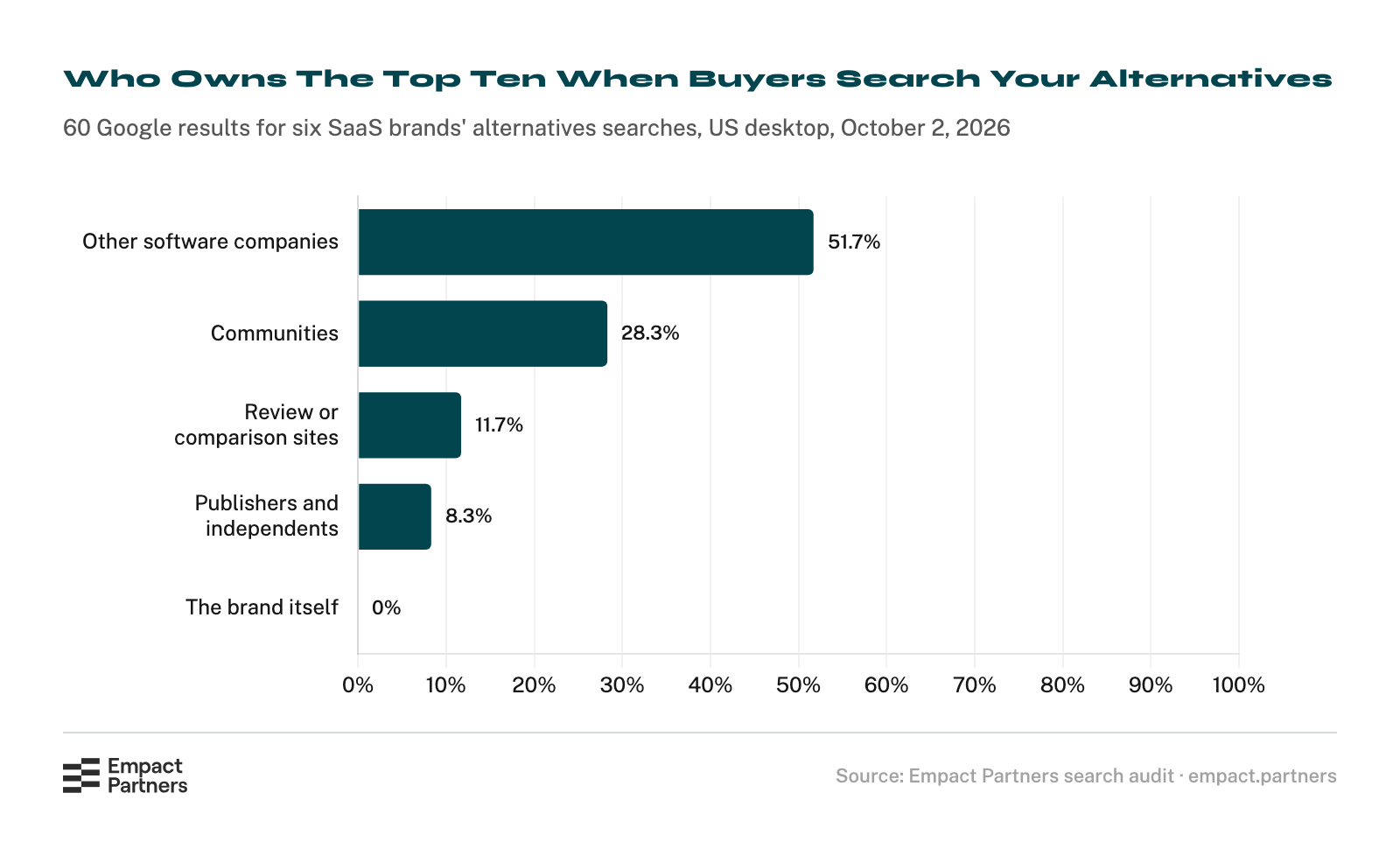
Nearly all of those 31 pages were a rival pitching itself. Of the 29 we could load, 27 listed the vendor’s own product as an alternative, and all 18 numbered lists put it at number one.
An alternatives page is a page built to rank when a buyer searches your brand name plus “alternatives,” and it’s almost never yours. A comparison page sets two named products side by side, usually on one of their own sites. Between them they’re most of what I’d call “why not you” content: anything public that answers the reasons a buyer might choose someone else.
Here’s who owned the top 20 results for each brand across both searches, with other software companies as “Vendors,” communities such as Reddit as “Forums,” and publishers as “Media”:
| Brand | Own site | Vendors | Reviews | Forums | Media |
|---|---|---|---|---|---|
| HubSpot | 1 | 10 | 0 | 5 | 4 |
| Asana | 0 | 8 | 5 | 5 | 2 |
| Mailchimp | 0 | 7 | 2 | 7 | 4 |
| Mixpanel | 0 | 8 | 4 | 5 | 3 |
| Zendesk | 1 | 13 | 0 | 5 | 1 |
| Notion | 1 | 11 | 3 | 5 | 0 |
Six incumbents, one country, and one day make a photograph, and photographs move. An hour before the recorded run, Asana’s own comparison page sat in the top ten for “asana vs monday,” and by the time we wrote the numbers down it had dropped out of it. The three brand pages that did rank were all head-to-head pages: HubSpot’s at #3, Zendesk’s at #1, and Notion’s at #3. Each shared its list with the rival’s version of the same page.
My favorite row in the whole count is Zendesk’s. HubSpot’s own blog ranks sixth for “zendesk alternatives,” and Zendesk publishes a page of fifteen HubSpot alternatives that Google’s AI Overview quoted when we searched for HubSpot’s.
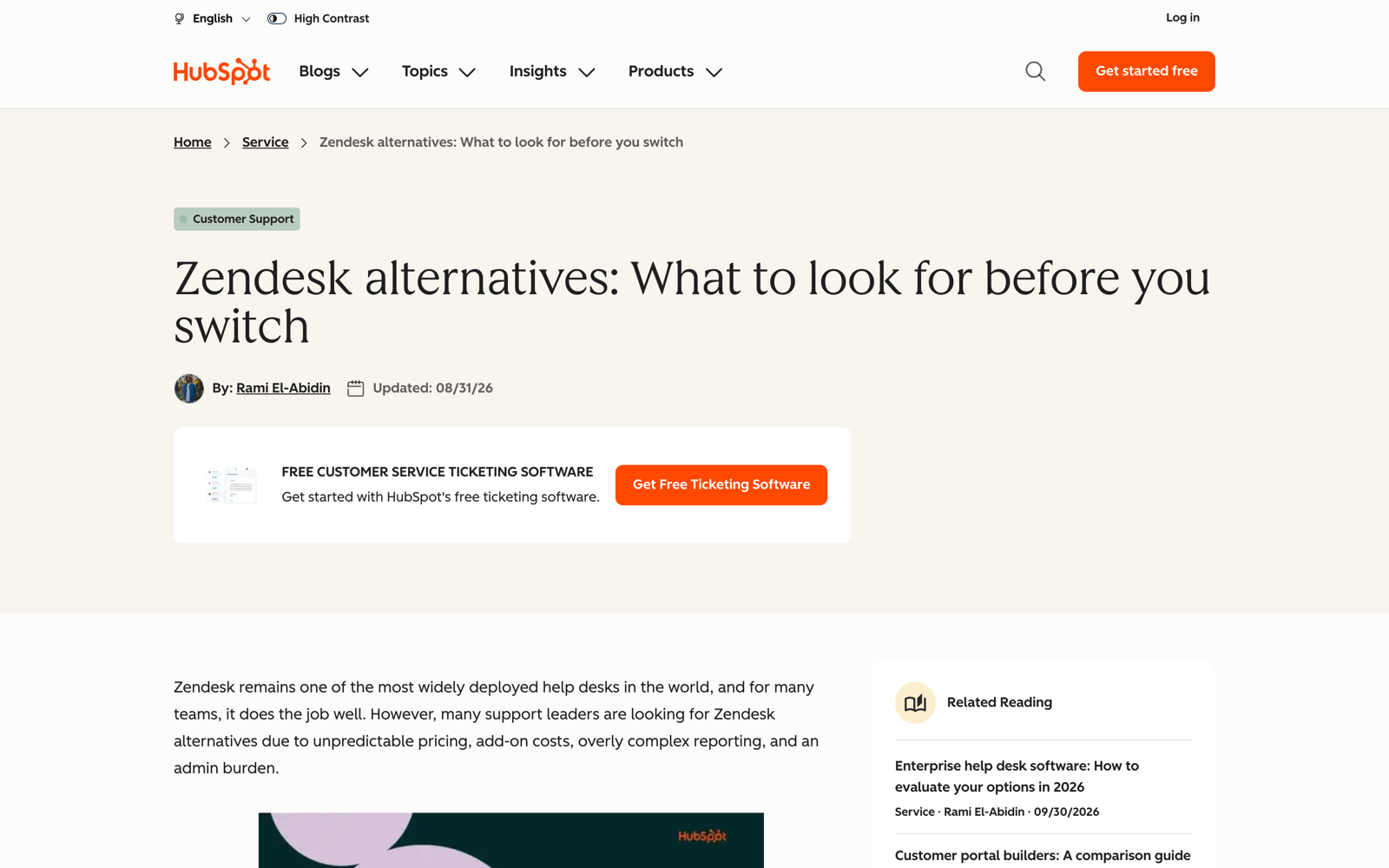
HubSpot’s post opens by crediting Zendesk, then lists the reasons support leaders leave it: “unpredictable pricing, add-on costs, overly complex reporting, and an admin burden.” Everybody in this table is somebody’s ventriloquist and somebody else’s dummy at the same time.
What the AI answers cited
We asked ChatGPT and Perplexity two questions about each brand, worded like “What are the downsides of HubSpot?” and “Why shouldn’t I use HubSpot?,” with web search on. The 24 answers cited 179 sources, and the brand’s own pages supplied about a fifth of them.
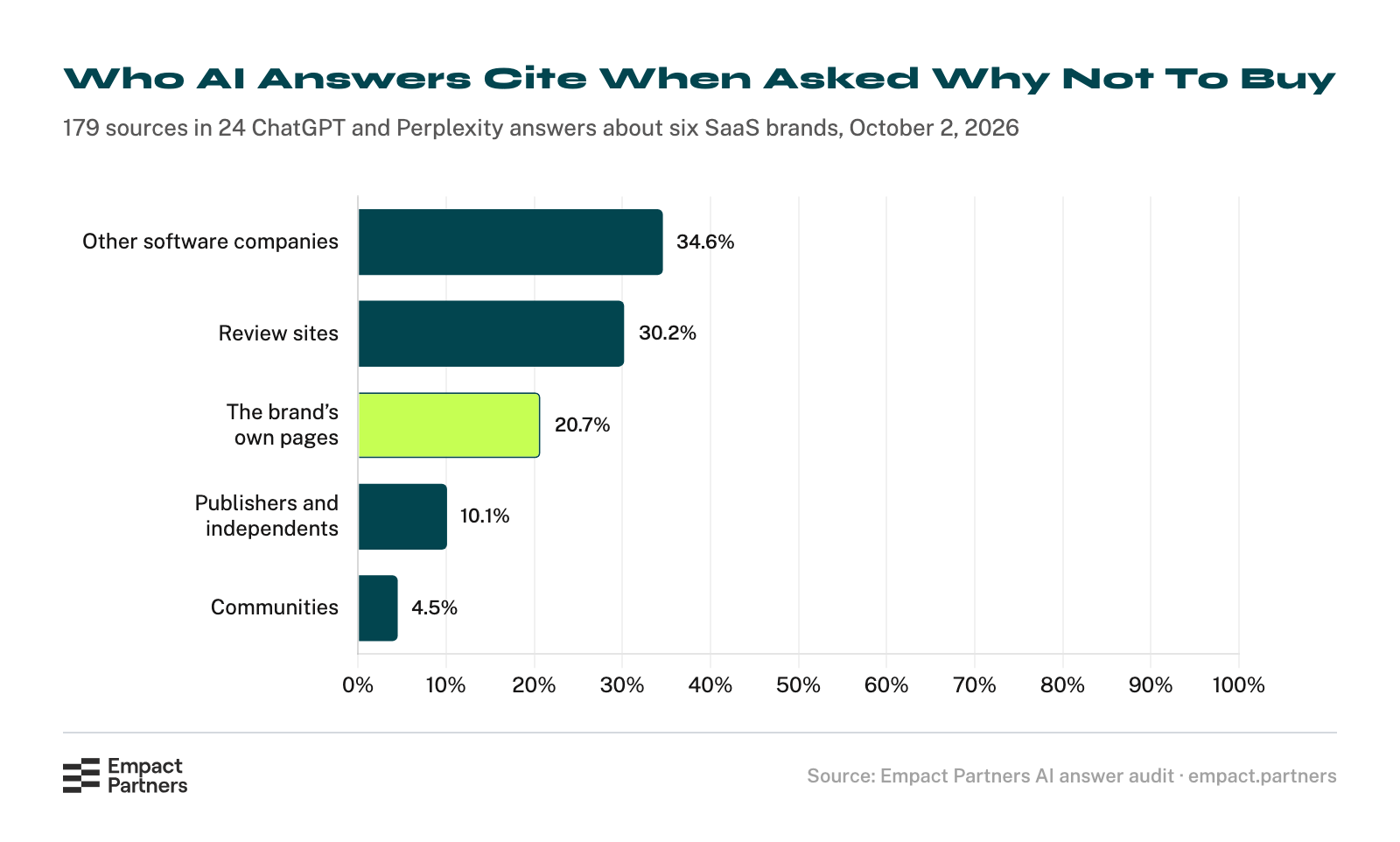
Perplexity cited the brand 0 times in 120 sources. ChatGPT did cite the brands, but none of those pages made the brand’s own case: they were pricing pages, help-center and community articles, legal pages, and feature pages. HubSpot’s site wasn’t cited once in its four answers.
One answer about Zendesk’s downsides cited Zendesk’s own support article, “Understanding real-time dashboard limitations.” So the engines aren’t hiding your limits from buyers. They’re reading them out of your fine print, which was written for customers who already bought, and pairing them with the case your competitors made.
Our own panel shows the same pattern at scale. In the data behind our AI search citation source statistics, 74.8% of the roundups engines cited were published by a software company on its own site. On Google AI Mode, three vendor mentions in four came with none of the vendor’s own pages beside them.

.png)
Then we asked the same two questions about six smaller brands that do publish an “honest page,” with the same two engines on the same day:
Six brands give a direction, and three of Tuple’s four answers were about tuples in programming, not the app. When an honest page exists, engines sometimes quote it. When it doesn’t, there is nothing of yours to quote.
Buyers ask this early, long before your sales team hears it. In G2’s March 2026 survey of 1,076 B2B software decision makers, comparing vendor strengths and weaknesses was the top use of AI chatbots in software research, at 41%.
6sense’s 2025 “Buyer Experience Report” put first contact with a seller 61% of the way through the buying journey, and found that four deals in five go to the vendor the buyer already favored before that call. We collected more of those buyer figures in our brand mention statistics.
Three Reasons The Honest Sentence Gets Cut
Most SaaS sites stay silent about their limits out of fear of arming competitors, a brand habit of publishing only strengths, and legal nerves. The first fear is already out of date, the second is a habit, and the third is mostly about the other half of the page.
The weapon argument says that if we admit reporting is weak, a rival will quote us. The audit says they don’t need to. G2 asks every reviewer what they dislike about the product, by name: on Slack’s page it reads “What do you dislike about Slack?” Buyers go there first.
“One thing that does help is checking the 1 and 2 star reviews first on G2, that’s where the real dealbreakers live.” – u/mattiaskoskinen, r/SaaS, Sep 2026
The brand habit is harder to argue with, because it feels like discipline. Somewhere in most SaaS marketing drives there’s a messaging matrix in which the company wins every row, and a comparison page built from it.
The guide ranking second for “competitor comparison pages” tells you to highlight your own strengths and the competitor’s weaknesses, which is how most of those pages get written. A buyer reads a page like that in four seconds, because it’s the same page your rival published about you.
Then the sales rep learns about the reporting gap from the prospect, on the third call, in front of the prospect’s boss. Peep Laja, who runs the message-testing company, Wynter, put the problem in one line on LinkedIn: “The comparison is happening whether you acknowledge it or not.”
What the lawyers will ask, and what to tell them
The legal fear lands on the wrong half of the page. A sentence about your own limits names no competitor, so under both the US and EU definitions it isn’t comparative advertising at all. It still has to be true. The risk lives in the half that names a rival, and both regimes allow that half too.
The FTC’s 1979 policy statement on comparative advertising says the Commission “encourages the naming of, or reference to” competitors. It calls truthful comparison “a source of important information to consumers,” and holds that disparaging advertising is “permissible so long as it is truthful and not deceptive.” Its substantiation standard is the same as for any other ad claim, no stricter.
The EU’s Directive 2006/114/EC permits comparative advertising when it meets eight conditions, and the ones a SaaS page trips on are short:
None of this is legal advice, and your counsel should read the final page. What I’d bring to that meeting is the definition and a file of sources for every claim about the rival. Freshness is the part teams underestimate.
“At my previous employer, we got the occasional letter politely demanding we update our competitor chart. Ours wasn’t even misleading but competitors update features over time and marketers are rarely prioritizing updating stuff like that.” – u/REMOTEivated, r/SaaS, Jun 2024
.png)
Admitting A Weakness Works Only When You Answer It
The research on admitting flaws supports honest pages, with conditions most advice leaves out. The reliable gain is credibility, and it comes from naming a weakness and answering it. A weakness left hanging does worse than saying nothing.
The blemishing effect is the finding most people mean. It’s the lift a small piece of negative information can give an otherwise positive description, first measured by Ein-Gar, Shiv, and Tormala in “When Blemishing Leads to Blossoming,” published in the Journal of Consumer Research in 2012. Read the conditions before you print it on a slide.
| Finding | Who was studied | When it helped | When it didn’t |
|---|---|---|---|
| The blemishing effect (Ein-Gar, Shiv, and Tormala, 2012) | Consumers judging products such as hiking boots, four studies | A weak negative, placed after the positives, read by people not paying close attention: purchase intent rose from 3.29 to 4.26 | Careful readers marked the same product down, 4.24 to 3.36; strong negatives weren’t tested, and the authors expect them to hurt |
| Two-sided messages (Allen’s 1991 meta-analysis, 26 studies) | Audiences for persuasive messages | Naming the downside and answering it beat one-sided messages | Naming the downside and leaving it unanswered did worse than one-sided |
| Two-sided advertising (Eisend’s 2006 meta-analysis) | Advertising studies | Credibility was the most reliable gain | Attitude to the brand peaks and then falls as the share of negative information grows |
| Ratings below perfect (Spiegel Research Center, 2017) | Online shoppers, consumer retail | Purchase likelihood peaked below a perfect 5.0 | It fell as ratings approached 5.0; the report puts the peak at 4.0 to 4.7 in one place and 4.2 to 4.5 in another |
The “Pratfall Effect,” the one with the spilled coffee, gets quoted more than all four. The 1966 study behind it, by Aronson, Willerman, and Floyd, ran on 48 male students, and the competent person’s gain from the blunder wasn’t significant on its own. Later work found it depended on who was watching. I’d leave it off the slide.
B2B buyers are the careful readers in that first row. They’re reading your page with a shortlist open in another tab, which is the condition under which a bare admission backfires. So the unit of an honest page is the admission and its answer together: what we’re worse at, why we chose that, and who should pick someone else because of it.
Marcus Sheridan, author of “They Ask, You Answer,” says it plainly on IMPACT’s site: “When you’re honest about drawbacks, yours and the industry’s, you build credibility.” The research agrees, with the small print attached.
What Competitor Comparison Pages Look Like When They’re Honest
A handful of SaaS companies already publish their own “why not” answer, and their pages show what the honest version looks like. Here’s what changes between saying it and staying silent, row by row, with the rows that are my view marked as mine.
| Say it | Stay silent | |
|---|---|---|
| Who writes your “why not” answer | You, on a page you can update | Rivals’ alternatives pages and review sites (0 of 60 alternatives results were the brand’s in our audit) |
| What AI answers cite about your limits | A page that states each limit with its reason (Plausible’s was cited in all four of its answers) | Your pricing page and help articles, without the reason (every brand page ChatGPT cited in our audit) |
| How the admission reads | As a trade with an answer, the condition under which two-sided messages win | As a bare negative, which is the version that loses with careful readers |
| Which buyers leave early | The ones you were going to lose in month three anyway (my view) | Nobody, until the renewal |
| What sales hears on call three | A prospect who already knows the trade-off and still booked (my view) | The reporting gap, from the prospect, in front of their boss (my view) |
| Legal exposure | Claims about yourself, plus a sourced file for claims about rivals | None of your own, and no control over anyone else’s |
Plausible: a whole page on when not to use it
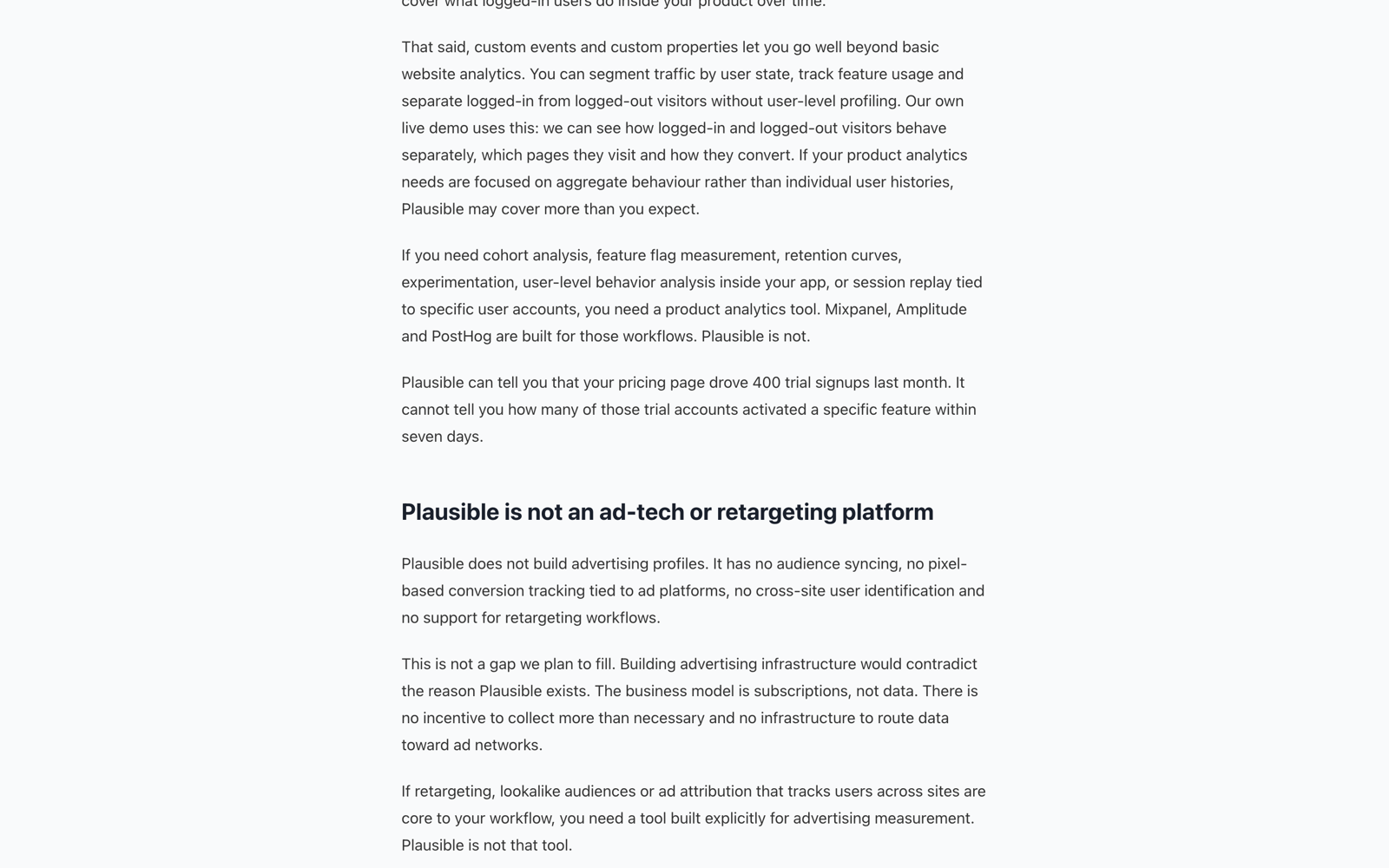
Plausible, the privacy-focused web analytics tool, publishes a page called “When Plausible is not the right fit.” Each section names the competitor to use instead, and one ends “Mixpanel, Amplitude, and PostHog are built for those workflows. Plausible is not.” The page frames each limit as a design choice, which is the answered admission in its purest form.
Help Scout: an alternatives page about itself
Help Scout publishes its own alternatives post, opening on the admission that “in some cases, we won’t be the best choice.” Further down it says “we’re certainly not the right tool for everyone,” tells a team of one that “it’s also OK to stick with Gmail or Outlook,” and names Zendesk as the pick for big teams that need the bells and whistles. That’s a vendor sending its own search traffic to a rival, on purpose.

Close: five reasons not to buy
Close published “5 Reasons Why You Shouldn’t Buy Close CRM,” with a table of who it is and isn’t for and a closing section headed “We’re Not For Everyone, But We Might Be For You.” It rules out teams that want a free CRM, large enterprises, and anyone who wants a “do-it-all” platform: “Close is not a do-it-all platform.”

Tuple: written for the person who signs the invoice
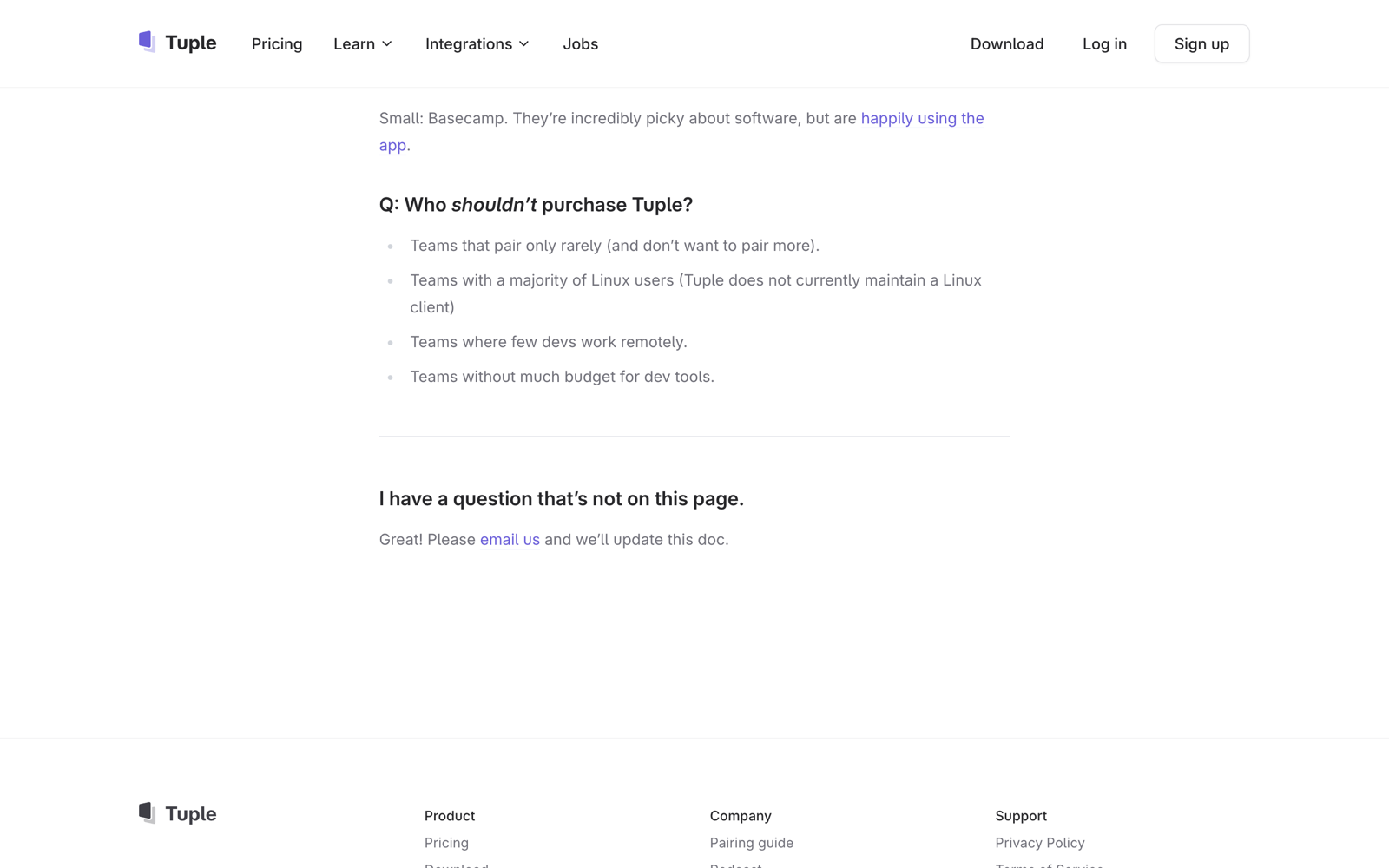
Tuple’s buyer guide, headed “Should we buy this Tuple thing?,” answers “Who shouldn’t purchase Tuple?” for the budget holder, starting with “Teams that pair only rarely (and don’t want to pair more).” It also names the Linux gap outright and answers the “Can’t we use Zoom?” question instead of dodging it.
PostHog and Supabase: comparison pages that give ground
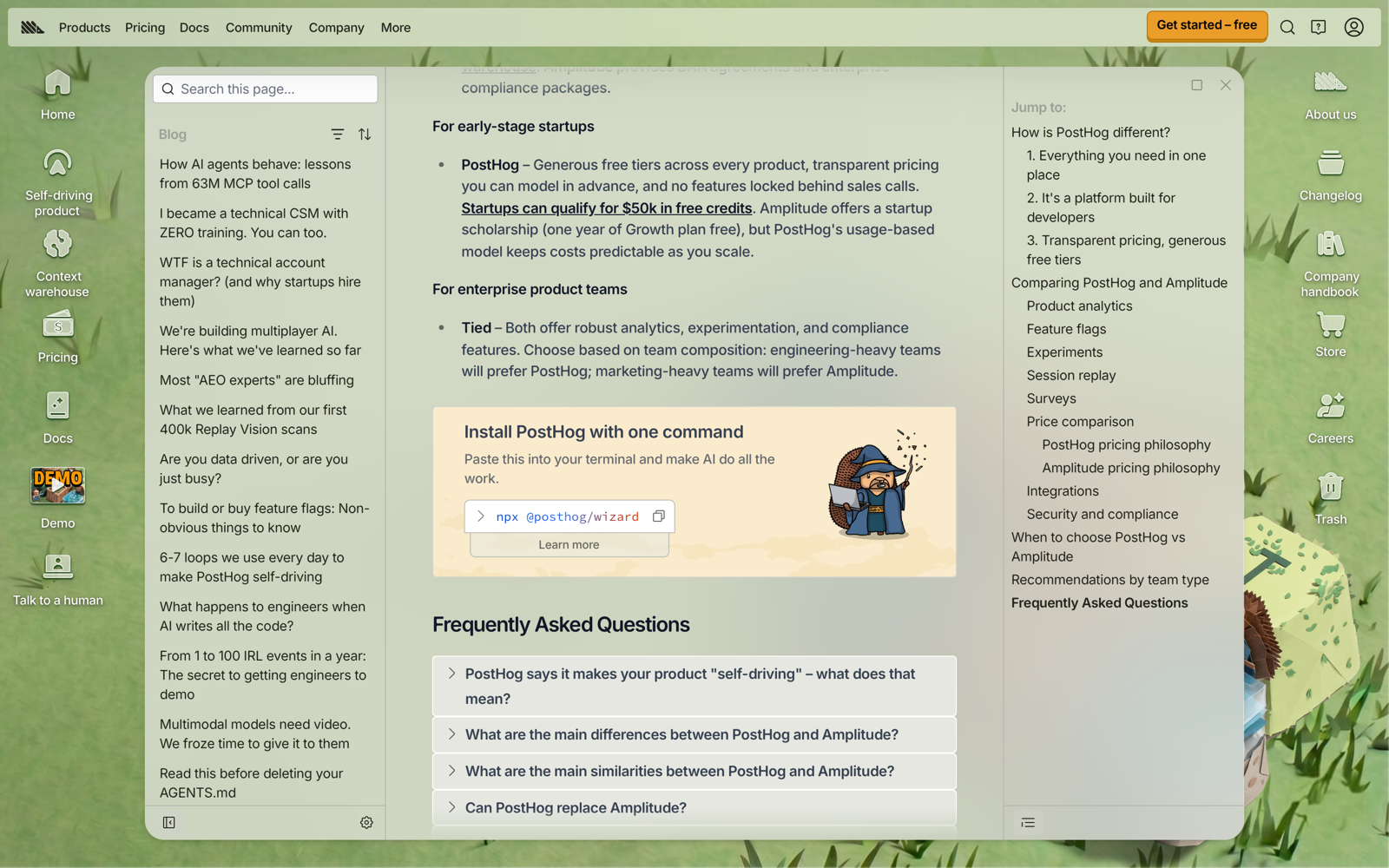
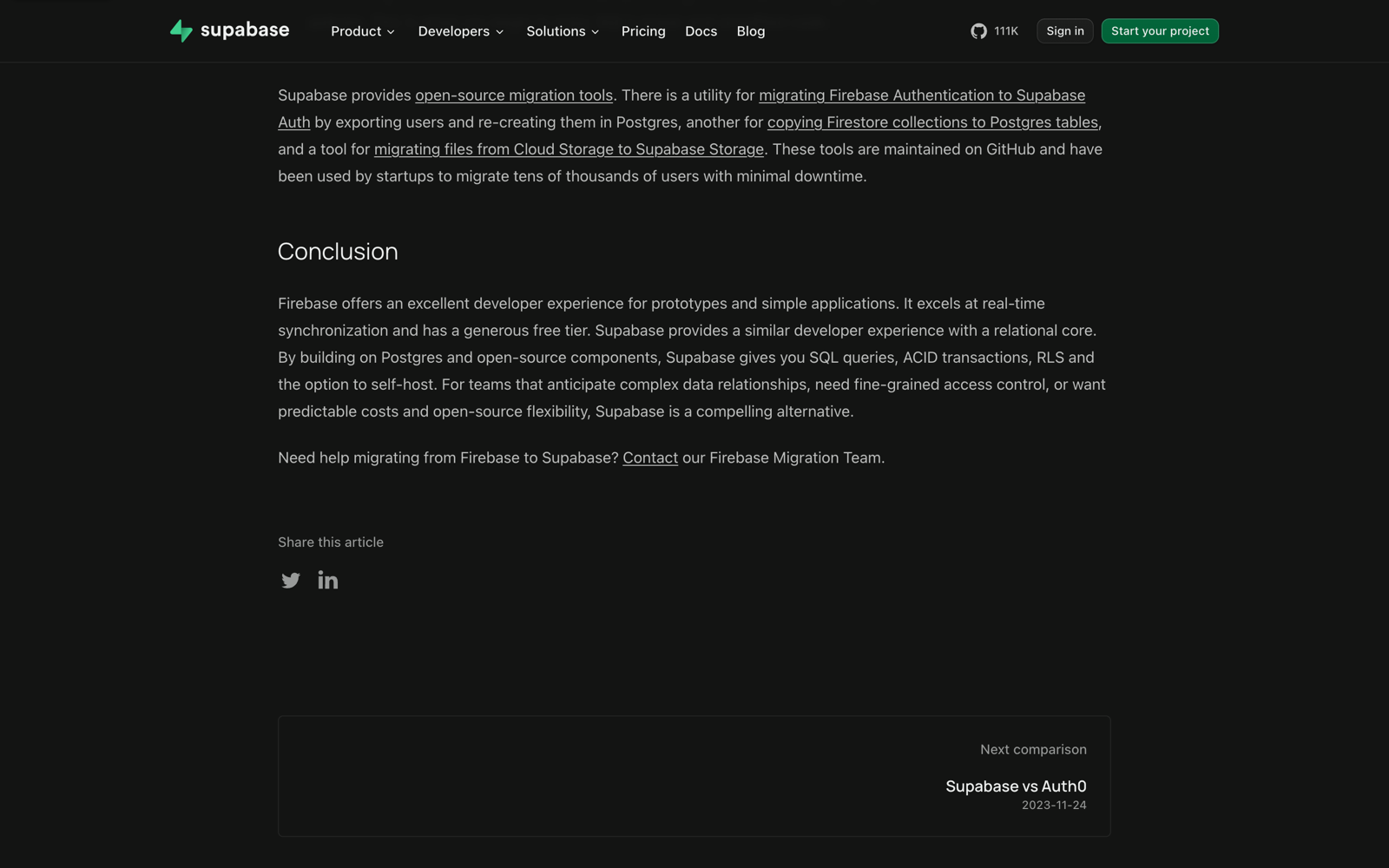
PostHog’s comparison with Amplitude splits the market by team type, calls the enterprise row a tie, and says which way the tie breaks: “marketing-heavy teams will prefer Amplitude.” Supabase’s Firebase page opens its conclusion by crediting the rival: “Firebase offers an excellent developer experience for prototypes and simple applications.” Then it says which teams Supabase suits better.
None of them reads as weak. They read as companies that know which buyer they’re for.
The best-documented outside example is a consumer one, with split credit. Domino’s reported domestic same-store sales up 14.3% in the first quarter of 2010, against 1.0% a year earlier, and its CEO credited “a remarkably better pizza, and our honesty in how we told consumers about it.” The recipe changed in the same quarter, so nobody can say which half did the work.
Writing the explanation first works the same way for a whole category. When Lative, a sales planning and decision intelligence platform for RevOps teams and one of our partners, set out to name a new category, we helped define its core messaging and wrote the eBook that set out what Growth Efficiency means. In our Generative Engine Optimization (GEO) work, getting AI engines to name a brand, the first brand to shape a category’s story tends to keep it.
Build The Objection Inventory From What You Already Own
An objection inventory is a ranked list of the real reasons buyers choose someone else, in the words they use. You already own most of the sources, and the first pass takes an afternoon. Here’s where to look and what to take from each.
| Source | What to record | What it tells you that the others don’t |
|---|---|---|
| Sales call recordings | The objection in the buyer’s exact words, the call stage, the deal size | Which objection kills deals late, after the demo went well |
| Lost-deal notes | The stated reason, then the rep’s free-text note under it | The real reason hiding under “price” or “no decision” |
| Review-site dislikes (G2, Capterra, TrustRadius) | The complaint, the reviewer’s role and company size, the date | What a buyer reads before they ever reach you |
| Reddit and community threads | The phrasing, the subreddit, the month, whether the poster is a vendor | The words buyers use when no vendor is listening |
| Competitors’ pages about you | Every limit they list, and whether it’s still true | The objection list your rival is betting on |
| Support tickets | Repeated “can it do X” questions from new customers | Gaps buyers discover after they’ve signed, which they’ll mention in reviews |
| AI answers to “why not” questions about your brand | The bullets and every cited source, across two engines | Which of the above an engine already treats as the answer |
Then rank, with inputs simple enough that sales won’t argue with them:
A false objection gets a correction with proof. A true one gets an admission with its reason and the buyer it suits. The partly true ones are where the work is, because they need a sentence your product team will sign.
The inventory is the “voice-of-customer” research we run before we write a partner’s copy: their own vocabulary first, then how buyers describe the problem on forums and review sites. A phrase lifted from a real thread beats anything a writer invents, and matching the buyer’s language is never permission to promise what the product can’t do.
What an afternoon gets you is the list and the top three. It doesn’t get you the sign-off: product agreeing to the wording of a weakness, sales agreeing to the competitor rows, legal reading the sources. The sign-off is where most of these pages die, and it’s the part we run with partners.
The Answer Page, Section By Section
An honest answer page states who you’re for, who you’re not for, what you’re worse at and why, when to choose a rival, how to switch, and the proof, in that order. The order does the work: the reader meets the fit before the flaw.
Here’s how those lines read for a fictional invoicing tool, Brindlepay, which exists only on this page:
Where the page lives decides whether an engine finds it. In a GEO workshop with a partner in a crowded category, the on-site pages we pointed to were use-case pages written in the language of real prompts, with plain comparisons against the incumbents. Put the answer there, and give it its own URL so an engine can cite it.
That’s also where Brand Marketing hands to our Generative Engine Optimization workstream. The page decides what you say about your limits, and GEO decides whether the review sites, roundups, and threads an engine checks say something consistent with it.
Four habits keep the page alive after launch:
April Dunford is a positioning consultant and the author of “Obviously Awesome,” a book on product positioning. Her talk on buyer-centric competitive positioning is worth the half hour for one argument in particular: around the sixteen-minute mark, she makes the case that being credible means admitting where competitors are good.
Where Honesty Backfires
An honest page fails when the honesty is aimed at someone else, can’t be checked, or admits something the product can’t survive. These are the versions I’d stop before they ship:
A perfect page about yourself fails for the same reason a perfect content score means you wrote what everyone else wrote: it tells the buyer nothing they couldn’t predict.
Here’s how we’d run it with you: a partnership starts with an audit and a roadmap, and the inventory is the Brand Marketing half of that audit. The answer page follows, in your buyers’ words, signed off by product, sales, and legal. Then the GEO work, so the sources an engine checks tell the same story. The page is the quick part. The change in AI answers takes months, and we say so up front.
If a rival’s alternatives page is doing your positioning for you, book a call with us, and we’ll work out together where your first honest page should start.