
The 7 Best GEO Software Tools, and Why We Built Our Own
The Empact Panel we built leads this GEO software roundup, then six tools by job: trackers, cited pages, mentions, Reddit, crawl, schema.
 Heather HollandWith
 Vlad Shvets
On this page
Empact Newsletter
One email a month on what is working in AI search and SaaS go-to-market.
Generative engine optimization (GEO) software is what a marketing team uses to get its product named when buyers ask ChatGPT, Google AI Mode or Claude for a recommendation. Most of what is sold under that name is a tracker. It asks the engines a fixed set of questions, counts how often your brand comes back in the answers and shows the pages they cite.
That count is where the job starts. Each answer draws on three kinds of source, and the count can’t tell you which of them goes with being recommended:
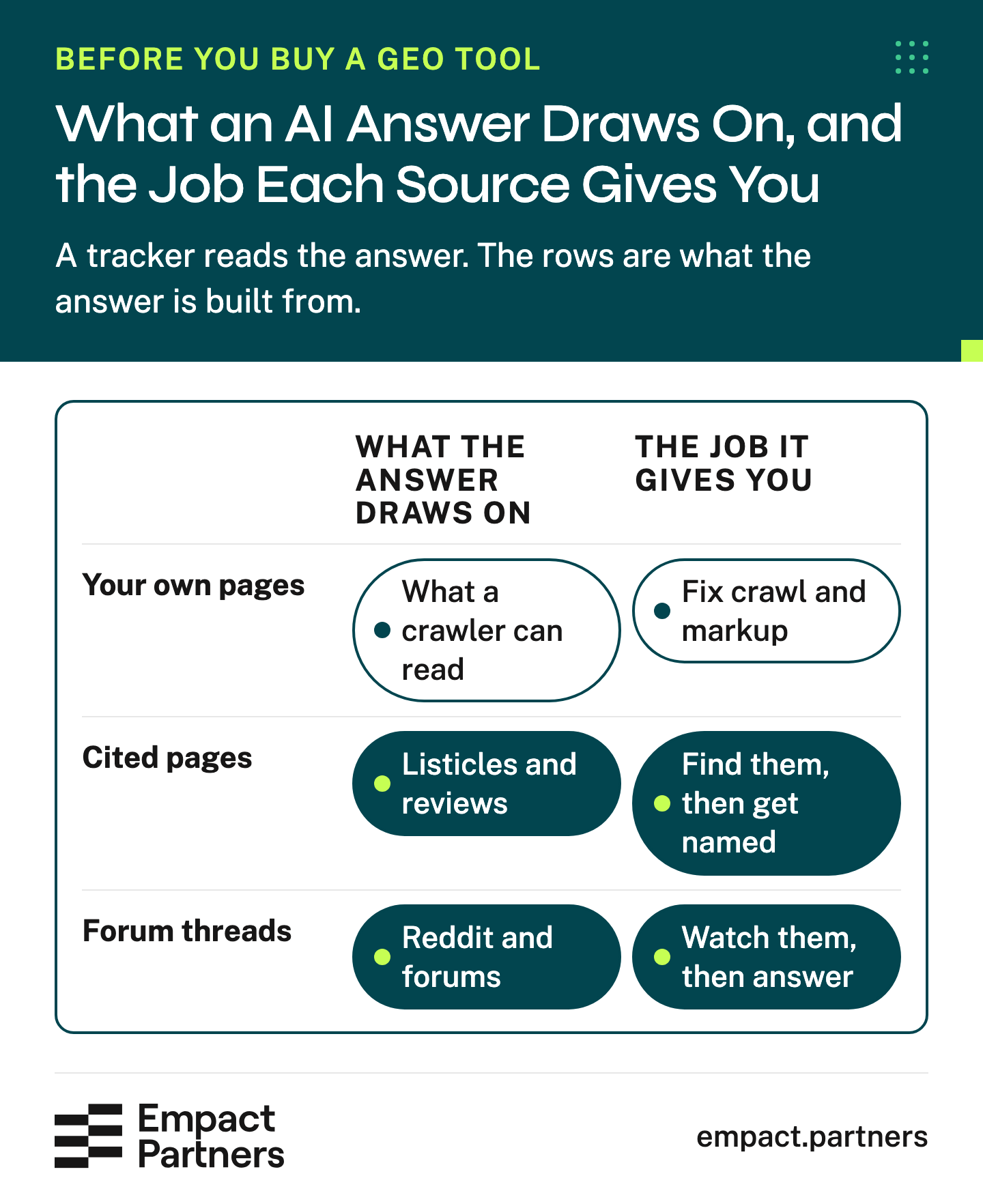
Empact Partners gets SaaS products recommended when buyers ask ChatGPT, Google AI Mode or Claude what to use, through generative engine optimization. We were unhappy with most GEO tools, so we built our own software, the Empact Panel, to answer that question.
The Panel leads the seven tools here, and the six after it each do one job well, priced as their own pages showed them on 16 November 2026:
Scroll horizontally to see all columns when the table is wider than this page.
| Tool | Best for | What it watches | Starting price | To try it |
|---|---|---|---|---|
| Empact Panel | What to work on next, not only where you stand | ChatGPT, Google AI Mode and Claude, weekly, on the questions your buyers ask | Included in every partnership | A call with our team |
| Otterly.AI | Your baseline in AI answers | Seven engines, by the prompts you choose | $29 a month | Free trial |
| Ahrefs Brand Radar | Cited pages in your category | 572 million prompts across six AI indexes | $199 a month, or $50 for your own prompts | Free AI visibility check |
| Brand24 | Alerts when a roundup or review names you or a rival | News, blogs, forums, reviews, podcasts and Reddit | $249 a month | 14-day trial |
| Syften | Reddit and forum threads where buyers ask for recommendations | Reddit, forums, Hacker News and Slack communities | $29.95 a month | 14-day trial |
| Screaming Frog SEO Spider | What a crawler that runs no scripts can read | Your own site, page by page | Free to 500 URLs, then $279 a year | Free version |
| Schema App | Schema markup across templated pages | Your own site’s templates | Custom quote | Demo |
Empact Panel
Best for: knowing what to work on next in AI search, not only where you stand.
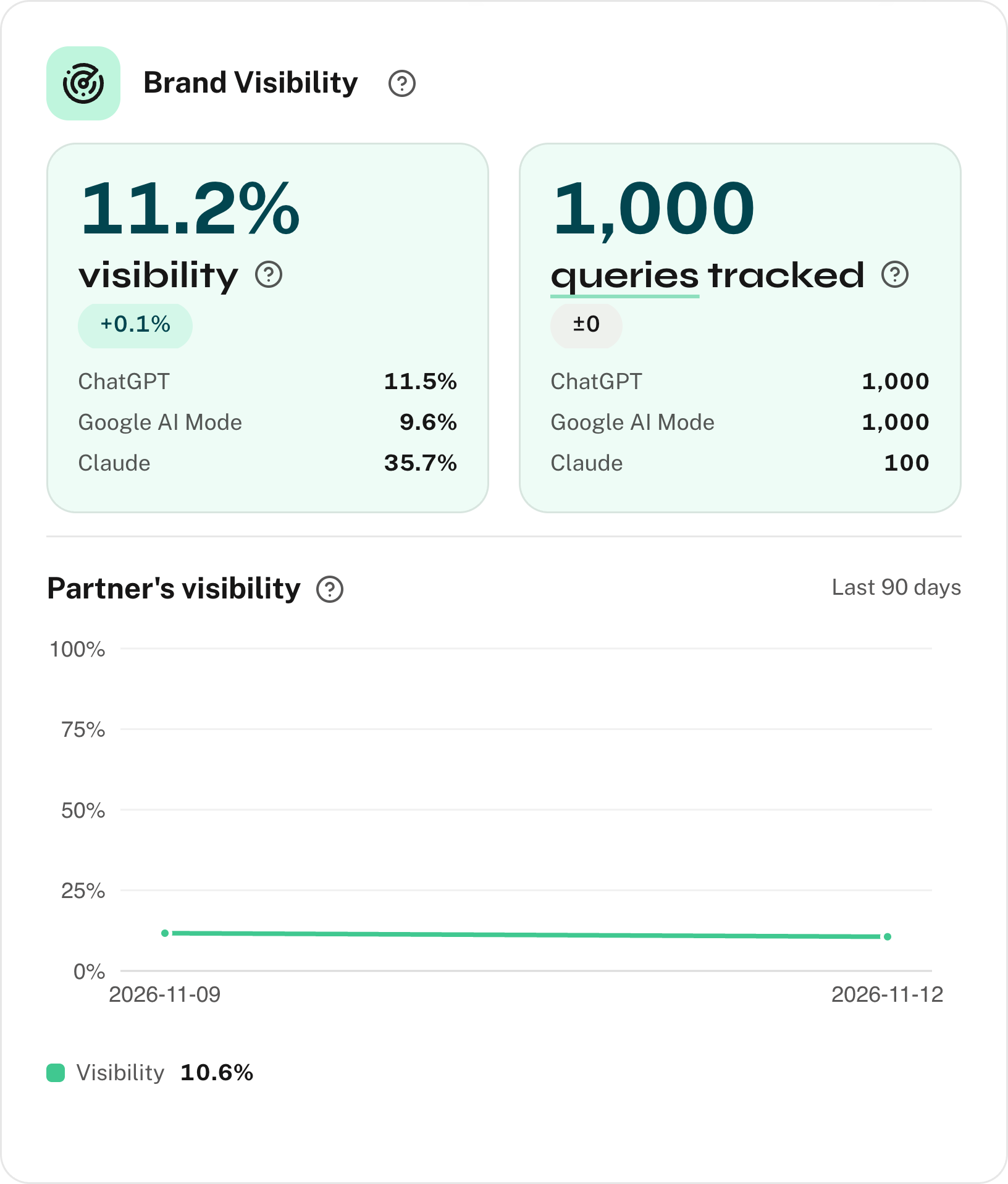
The Empact Panel is the software we built and run for our partners, more than a dozen of them. Every week it asks ChatGPT, Google AI Mode and Claude the questions a partner’s buyers ask. It keeps every answer, every page the answer cites and every competitor it names.
We built it because we were unhappy with most GEO tools. A tracker tells you how often you’re named. It doesn’t tell you why a rival is named instead of you, or what to work on next quarter.
Why the Panel beats the tools below
Five things set it apart from every tracker we tried:
- What’s behind it. Beside your visibility, the Panel shows which sources the answers lean on in your category: your own pages, the listicles they cite and the Reddit threads they read.
- Weekly page checks. The listicles and threads AI answers keep citing are read again each week, so you see the week a placement appears or quietly disappears.
- Where to work. It points to the listicles and threads that mention your rivals but skip you, and shows how far ahead each rival already is on them.
- Your buyers’ questions. Each Panel is set up around one partner’s buyers, category and rivals.
- Built into reports. Its numbers feed the reports we send our partners, each recommendation with a first step.
A tracker and the Panel can both give you a visibility score. Only the Panel turns that score into next quarter’s plan, and that is why we think no other GEO software comes close for a SaaS team.
A GEO budget turns on which pages to win next, and a visibility score alone doesn’t answer that.
See which threads AI answers lean on, and whether they name you
In this partner’s category, Google AI Mode’s answers lean on 26 Reddit threads, and none of them names the partner. ChatGPT and Claude cite none of those threads. One card says where its Reddit work starts:
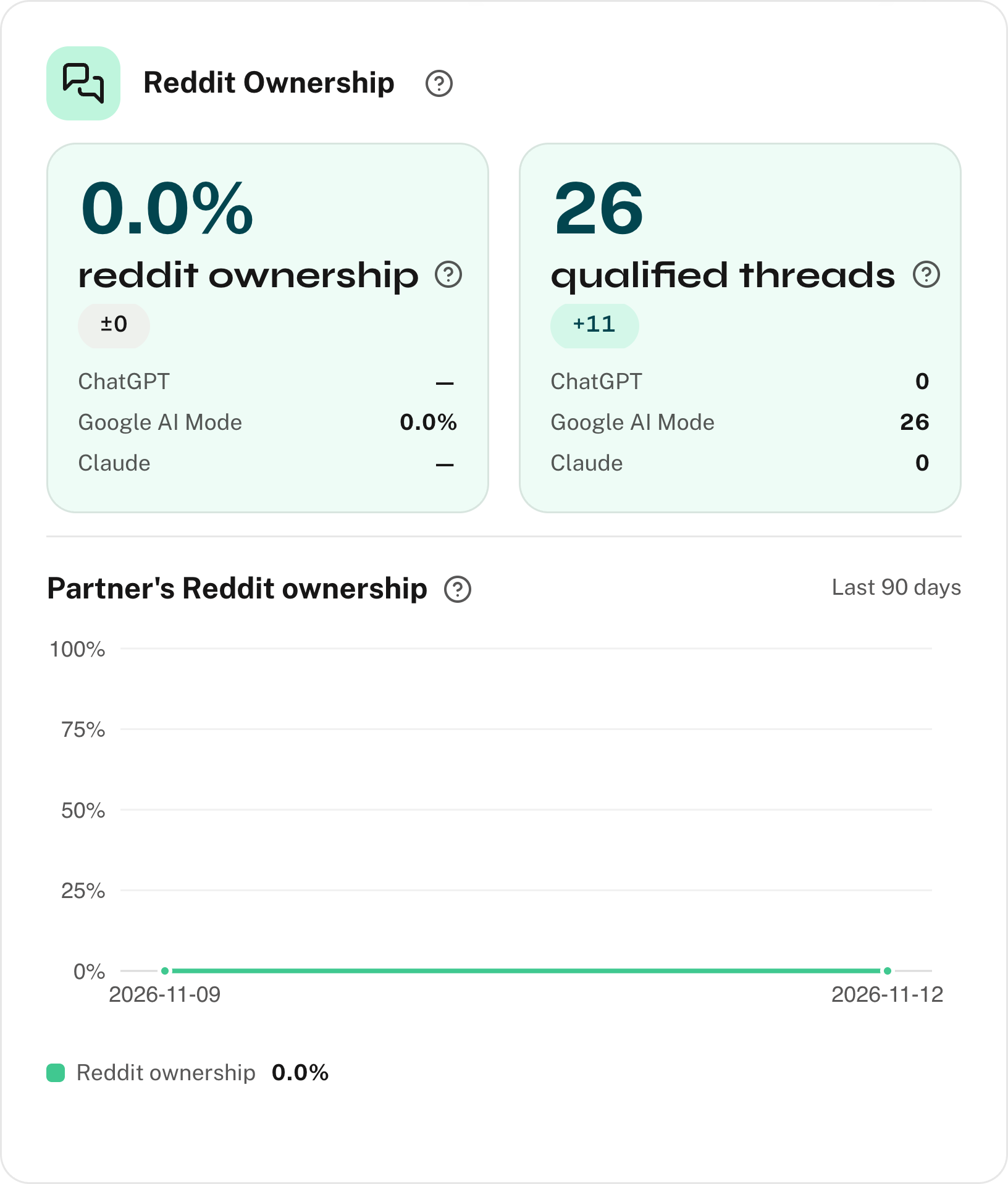
A tracker would have shown the same partner one visibility score and stopped there.
Pricing
- With a partnership: included. Every partner gets an Empact Panel, set up around its buyers’ questions.
Pros and cons
Pros
- Shows what sits behind your visibility, not only the score
- Rereads the cited listicles and Reddit threads each week
- Built around your buyers’ questions and rivals in ChatGPT, Google AI Mode and Claude
Cons
- Comes with an Empact partnership
- Weekly, so a change shows in next week’s numbers, not today’s
- ChatGPT, Google AI Mode and Claude only
You won’t find the Panel reviewed on G2 or Reddit, since we set it up for our partners. The voice in this seat is ours:
A visibility score tells a team where it stands. The Panel tells it which pages to win next, and that is what I’d take into a budget meeting.
 Heather Holland on LinkedInOpens in a new tab
Verdict: the GEO software for a SaaS team that wants its numbers to say what to do next, and the reason we built our own. It comes with a partnership, so if all you need is a score for a board slide, start with Otterly’s $29 plan.
Otterly.AI
Best for: a first baseline across ChatGPT, Google AI Mode and Claude, on a small budget.
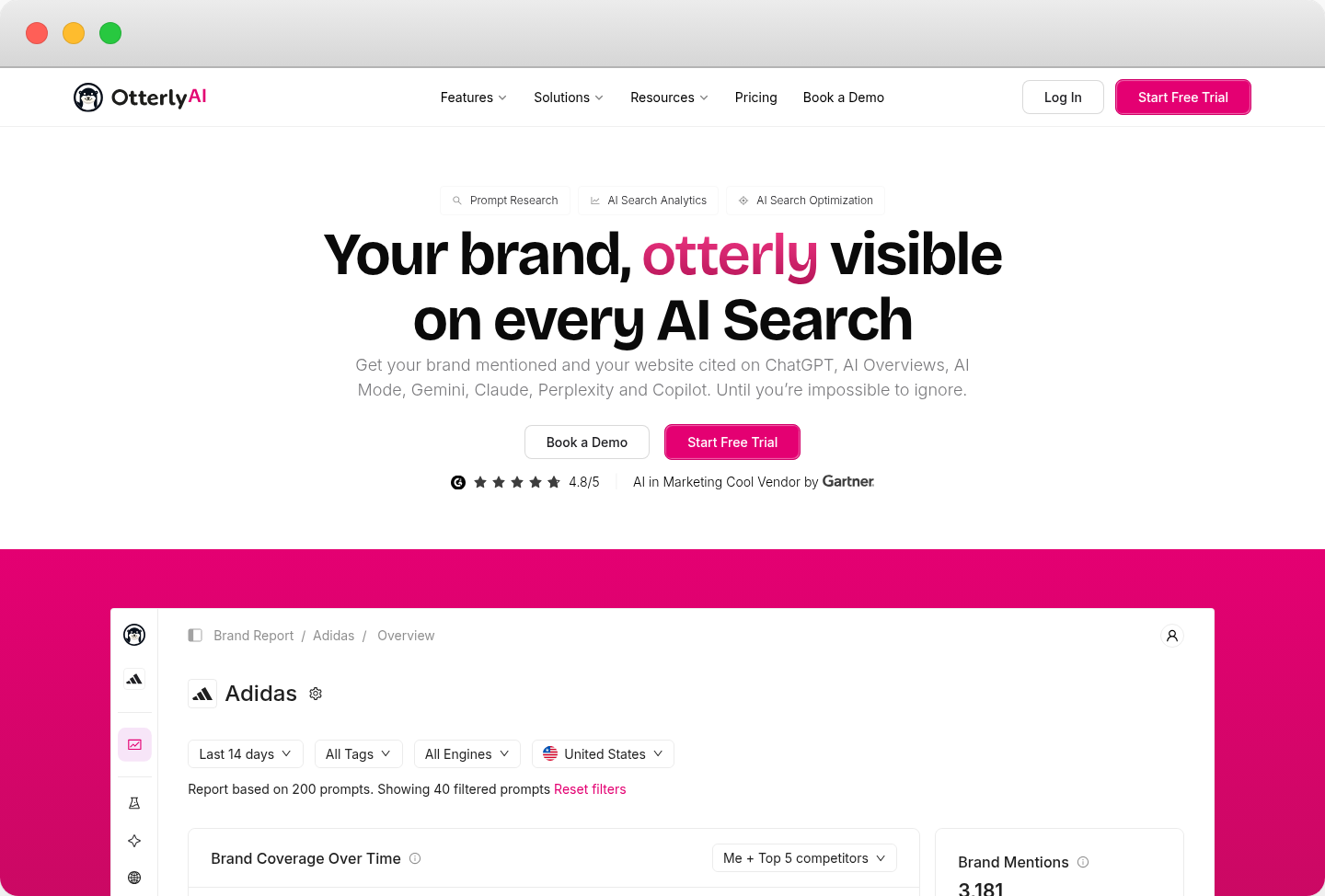
Otterly.AI is an AI search tracker that marketing teams use. It asks the engines your buyers’ prompts every day, then reports how often you and your rivals appear and which pages each answer cites. Every plan, the $29 one included, can pick ChatGPT, Google AI Mode and Claude from its seven engines 1.
The knock is the credit math. Otterly counts each Claude answer as three credits, so the Lite plan’s 2,000 monthly credits cover 12 prompts checked daily on those three engines 1. Its own advice is 50 to 100 prompts per topic, and on the same engines that means the $189 Standard plan.
Pricing
- Lite: $29 a month, 20 prompts and 2,000 credits, three of seven engines, one workspace.
- Standard: $189 a month, 160 prompts and 15,000 credits, with API access and a connector for AI assistants.
- Premium: $489 a month, 535 prompts and 50,000 credits, with daily or weekly checks.
- Enterprise: custom pricing, from 1,000 prompts.
Pros and cons
Otterly is cheap to start and covers the engines that matter, but those engines cost the most credits:
Pros
- Every plan can track ChatGPT, Google AI Mode and Claude
- Unlimited seats, brands, competitors and countries on every plan
- The full answer and its cited pages sit behind every number
Cons
- Claude answers cost three credits each, so Lite covers 12 daily prompts on the three engines
- Lite has no API and three recommendations a week
- Weekly checks, which stretch credits furthest, start on Premium
What G2 reviewers and Reddit say
It gives me clear, easy-to-understand insights into brand mentions, citations, and overall visibility, all in one dashboard.
Reviewer at a mid-market companyMay 2026 r/SEO_LLM
View threadListicle after listicle, competitive article after competitive article. Just useless ideas chasing prompt after prompt.
Oct 2026
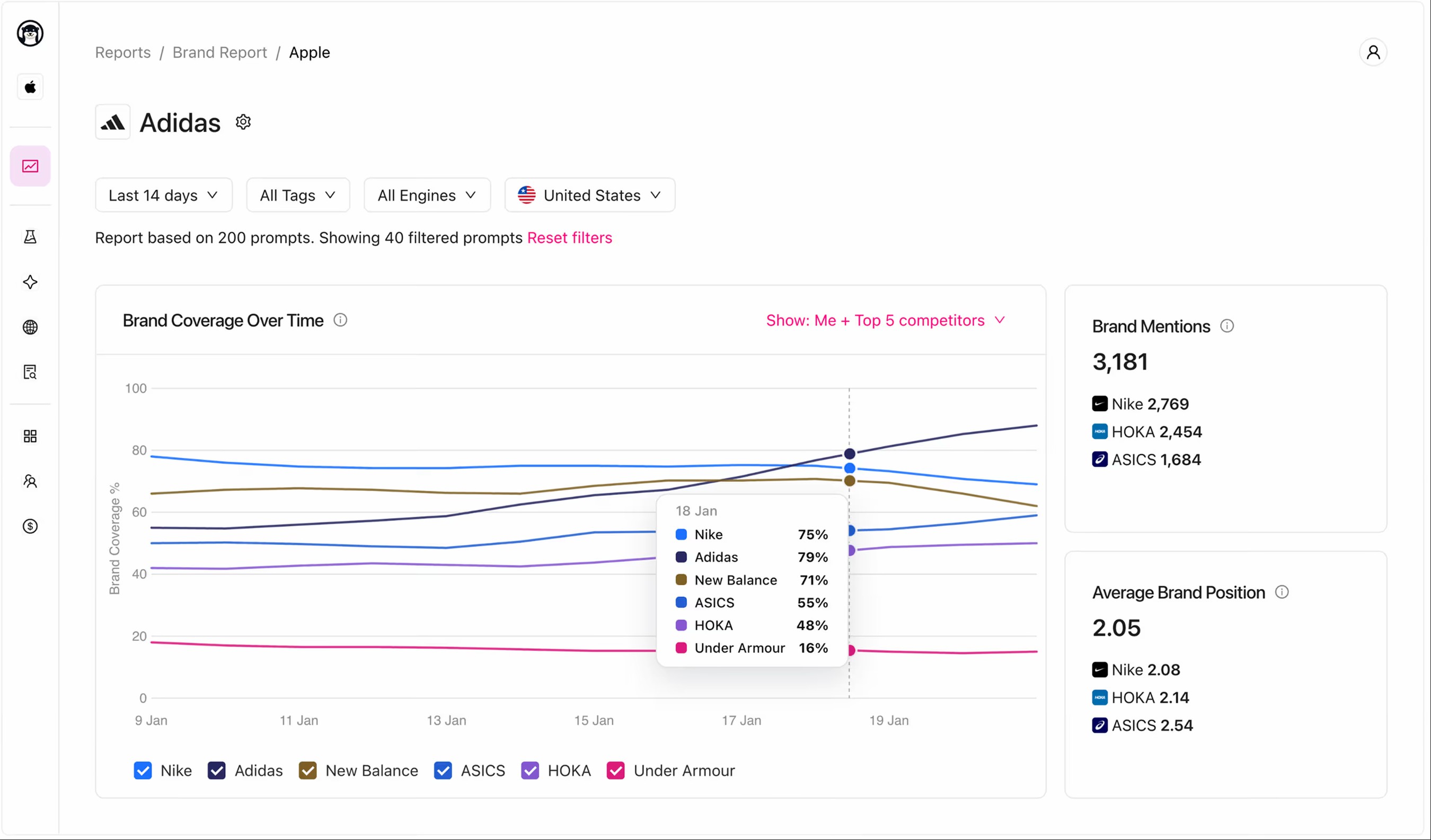
The Brand Report puts your baseline on one screen
The Brand Report plots how often answers name you and five rivals over time, next to your total mentions and your average position in the answer. Filter it to one engine or one country and you have the number a quarter of GEO work gets judged against.
Verdict: the tracker to set a baseline on when ChatGPT, AI Mode and Claude all matter and the budget is small. Plan for Standard if you follow its own 50-prompt advice, and treat its recommendations as prompts for your own thinking.
Ahrefs Brand Radar
Best for: researching the cited pages in your category before you write a single prompt of your own.
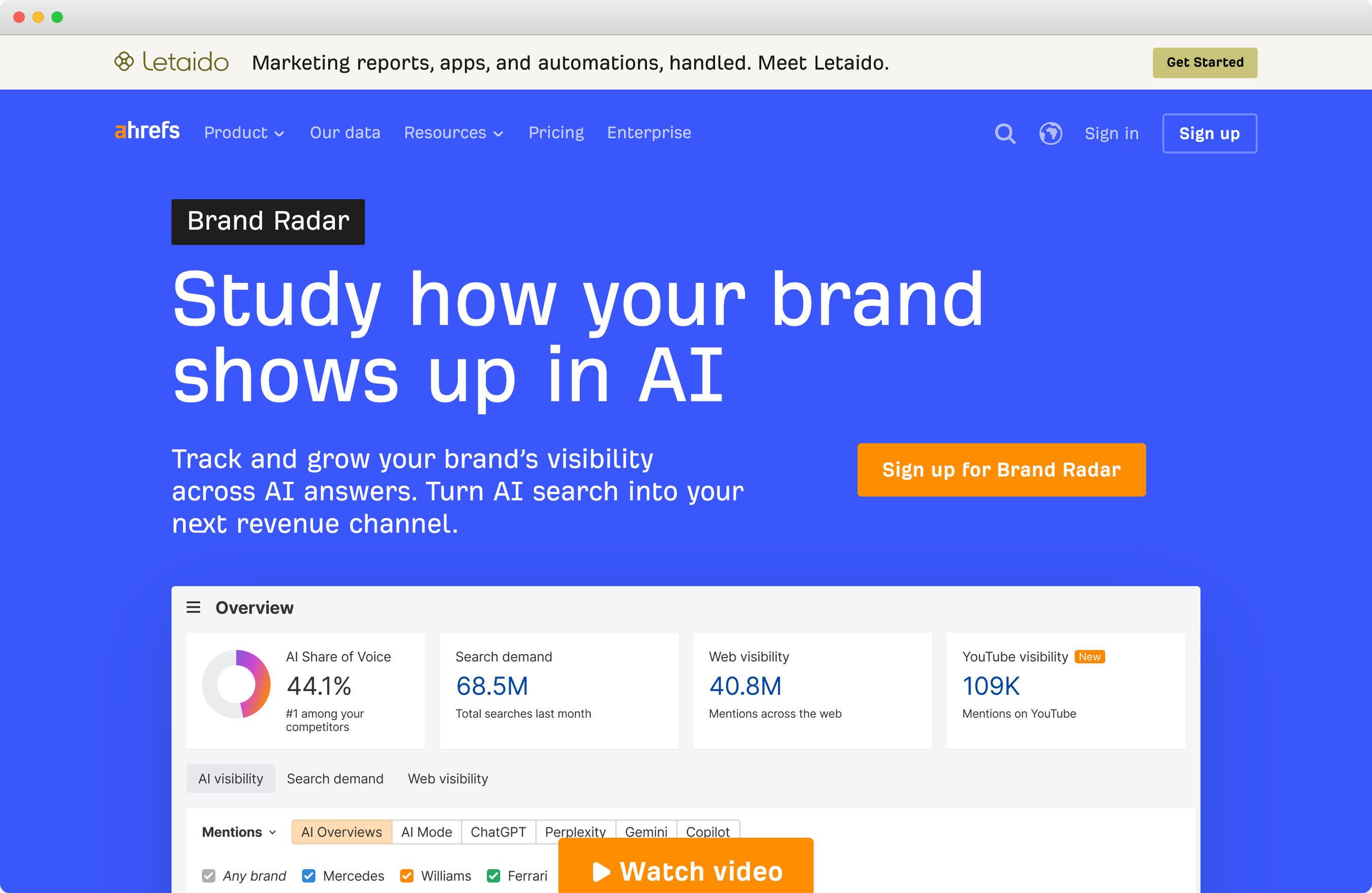
Brand Radar is Ahrefs’ AI visibility product. Its AI Visibility Index holds answers to 572 million prompts across six AI indexes 2. Look up any brand or domain with no setup, and you see which answers name it and which pages they cite. Run your two strongest rivals through it and you have the pages the engines lean on when they recommend them.
The prompts are the catch. Ahrefs builds them from Google’s People Also Ask questions and its keyword database 2, so the index mirrors search demand more than the longer questions buyers type into a chat. Claude isn’t one of the six indexes, and tracking it through your own prompts costs eight checks per update 3.
Pricing
- AI Visibility Index: from $199 a month, with 2,500 checks and $0.02 a check after that.
- Custom prompts: packs of 2,500 checks for $50 a month, 7,000 for $100 and 25,000 for $250.
- With an Ahrefs plan: Lite, at $129 a month, includes 150 checks, enough for five prompts on one engine.
Pros and cons
Its strength is the size of the index, and its weakness is where that index comes from:
Pros
- Look up any brand or domain with no prompt set to build
- Shows the pages each answer cites, and where your content was used without a citation
- Sold on its own, without a full Ahrefs plan
Cons
- Index prompts come from Google questions, not chat conversations
- Claude only through your own prompts, at eight checks per update
- Custom prompts are billed per check, so every engine you add multiplies the cost
What Reddit says
r/bigseo
View threadive tried the tools and i dont really trust 100% any of them, that being said, since brand radar sits on a load of data collected over the years im sticking with it.
Aug 2026 r/bigseo
View threadWe ended up going with Peec.ai because Ahrefs Brand Radar data seemed like rehashed keyword data, curious if that's improved a lot since its rollout.
Aug 2026
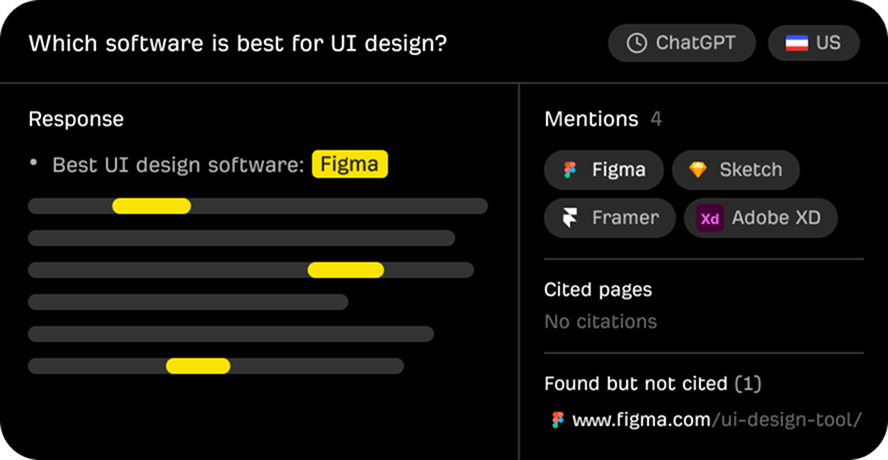
Brand Radar shows the pages an answer used without a citation
For each stored answer, Brand Radar separates the pages the engine cited from the pages it used without a link, which Ahrefs calls found but not cited 2. Run it on yourself and that second column shows where your content already shapes answers that give you no credit.
Verdict: the tool to research a category’s cited pages, yours and your rivals’, before you commit to a prompt set. Don’t make it your only tracker if Claude matters to your buyers, or if your category is too narrow for Google’s questions to cover it.
Brand24
Best for: alerts when a roundup, review page or article names you or a rival.
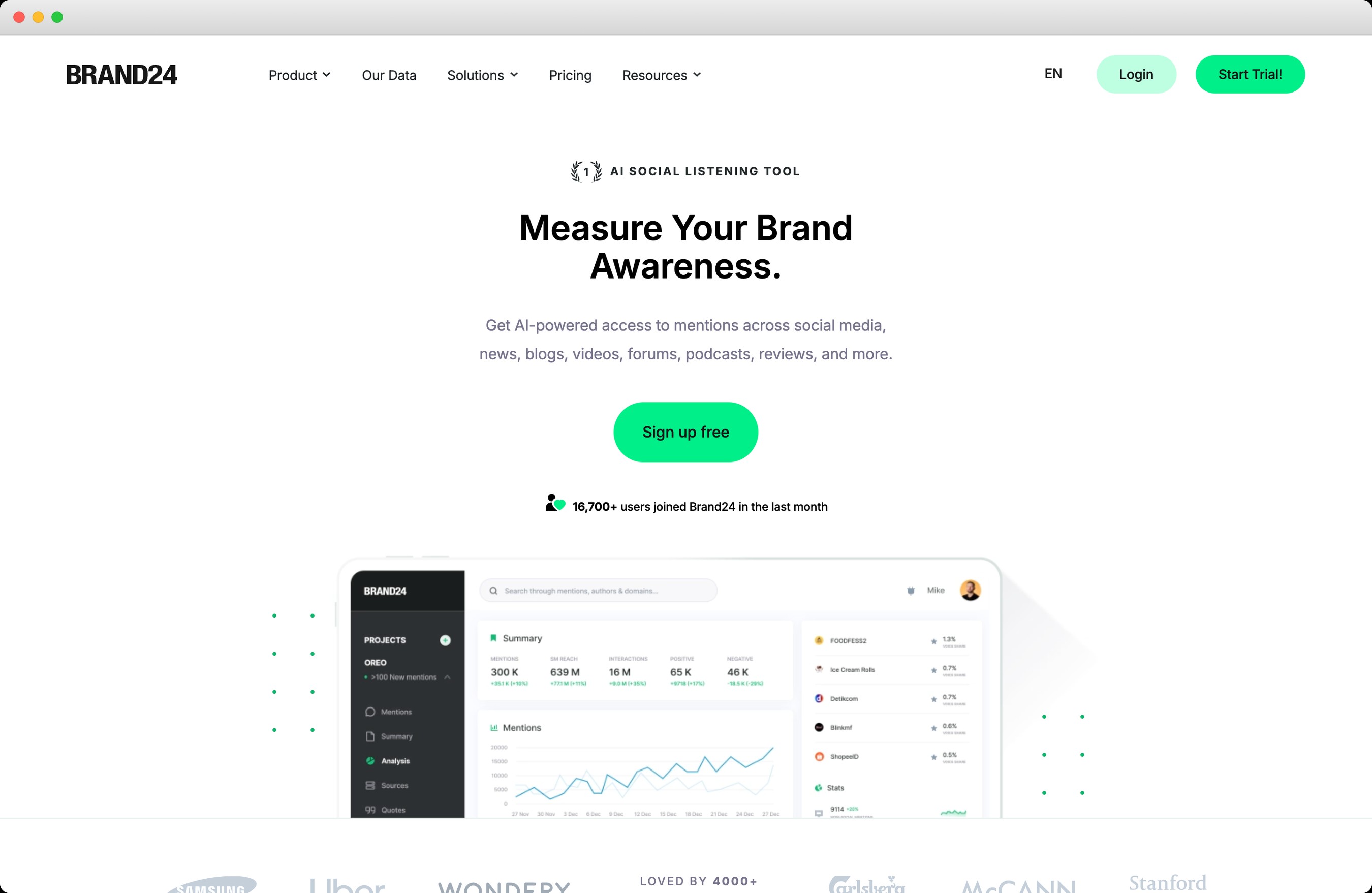
Brand24 is a media monitoring tool. You give it keywords, usually your brand, your product and your rivals, and it collects the public mentions it finds across news, blogs, forums, reviews, podcasts, Reddit and social networks 4.
Its job in GEO is watching the pages that already name you and the new ones that name your rivals. A roundup that drops you or adds a rival changes what the engines can cite.
The knock is price against what a SaaS team needs here. Its entry plan is $249 a month for three keywords, enough for your brand and two rivals and nothing else. The AI Visibility module sits only on Enterprise, from $1,499 a month 4.
Pricing
- Individual: $249 a month, or $199 billed annually, for 3 keywords, 2,000 mentions and updates every 12 hours.
- Team: $349 a month, or $299 annually, for 7 keywords, 10,000 mentions and hourly updates.
- Pro: $499 a month, or $399 annually, for 12 keywords, 40,000 mentions and real-time updates.
- Business: $699 a month, or $599 annually, for 25 keywords and 100,000 mentions.
- Enterprise: from $1,499 a month billed annually, with the AI Visibility module.
Pros and cons
Brand24 covers more kinds of page than any other tool here, at a price that assumes a bigger program:
Pros
- One feed for news, blogs, forums, reviews, podcasts and Reddit
- Alerts built on your own filters, by email or in Slack
- A 14-day trial before you pay
Cons
- Three keywords on the $249 plan
- Mentions that aren’t about you still get through the filters
- AI answer tracking only on Enterprise
What reviewers on G2 say about Brand24
Setting up a project was simple: I added my brand name and related keywords, and it started pulling mentions from Reddit, news sites, blogs, and social media into one feed.
Associate immersive experience developerOct 2026 Sometimes unrelated mentions appear, even when filters and excluded keywords are configured.
Contractor in information technologyOct 2025
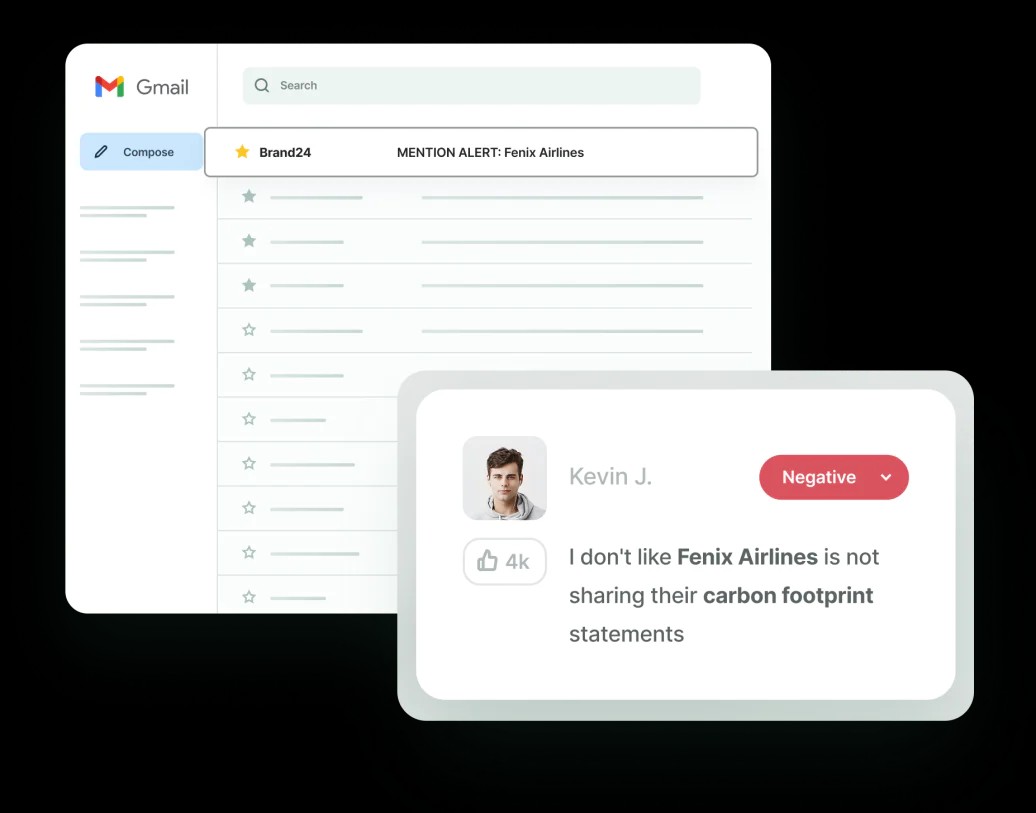
Personalized Notifications bring each new roundup to your inbox
Personalized Notifications are alerts built on the filters you choose 4. Point one at a rival’s name on blogs and news sites only, and every new roundup that names them reaches your inbox.
Verdict: worth it for a team whose GEO program is already running, where hearing the week a roundup changes justifies $249 a month. Skip it while you are still setting a baseline, and look at Enterprise only if you want AI answers and web mentions in one contract.
Syften
Best for: alerts from Reddit, forums and other communities where buyers ask for recommendations.
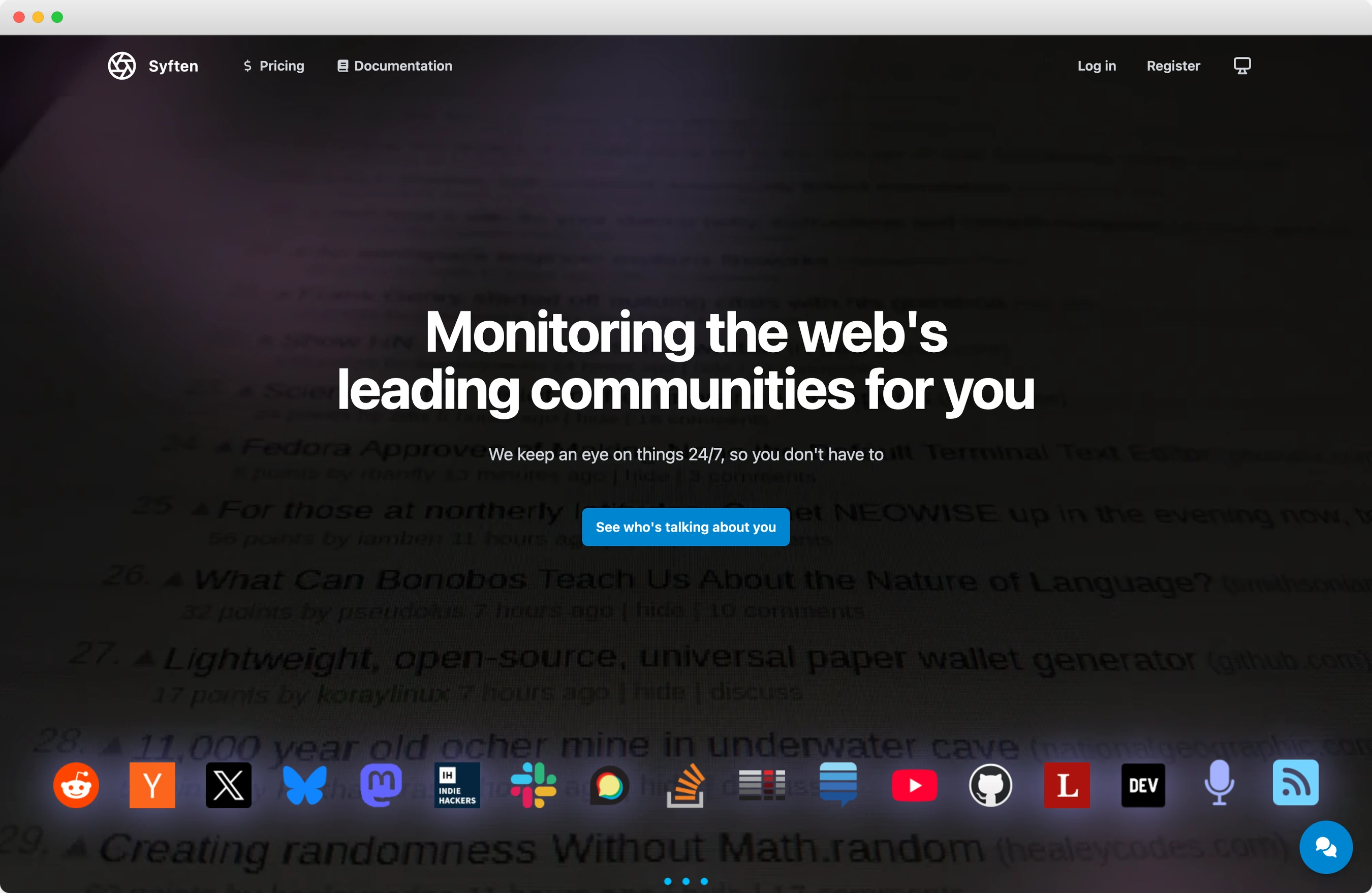
Syften is a keyword alert service for online communities. It watches Reddit, forums, Stack Exchange, Hacker News, Indie Hackers, GitHub, Slack communities and podcasts 5. Each match goes to email, Slack, RSS or an API, and on Reddit Syften aims to send it within a minute. GummySearch, which many teams used for this, closed at the end of November 2025 6.
Syften alerts and leaves the research to you. It matches the words you give it, and its own FAQ says it doesn’t replace GummySearch’s audience research. The Entry plan has no AI filtering, so a product name that is also an ordinary word floods it.
Pricing
- Entry: $29.95 a month, 3 community filters and 100 results a day, 1 web filter and a 7-day archive.
- Standard: $49.95 a month, 20 community filters and 200 results a day, AI filtering, Slack and a 30-day archive.
- Pro: $119.95 a month, 100 community filters, the full archive, webhooks and a connector for AI assistants.
- Add-ons: X monitoring for $40 a month and YouTube for $20 a month.
Pros and cons
Syften does one job well and cheaply, and leaves the judgment to you:
Pros
- Reddit, forums, Hacker News and Slack communities in one alert stream
- Under a minute from post to alert on Reddit, by Syften’s own target
- A 14-day trial with no card
Cons
- No AI filtering on the $29.95 plan
- Keyword alerts only, with no audience or pain-point research
- X costs an extra $40 a month
What G2 reviewers say
Fast notifications straight to a slack channel.
Verified user in computer softwareMar 2020 Wish we could get Quora alerts, but that seems to be a restriction caused by Quora's site itself.
Verified user in computer softwareMar 2020
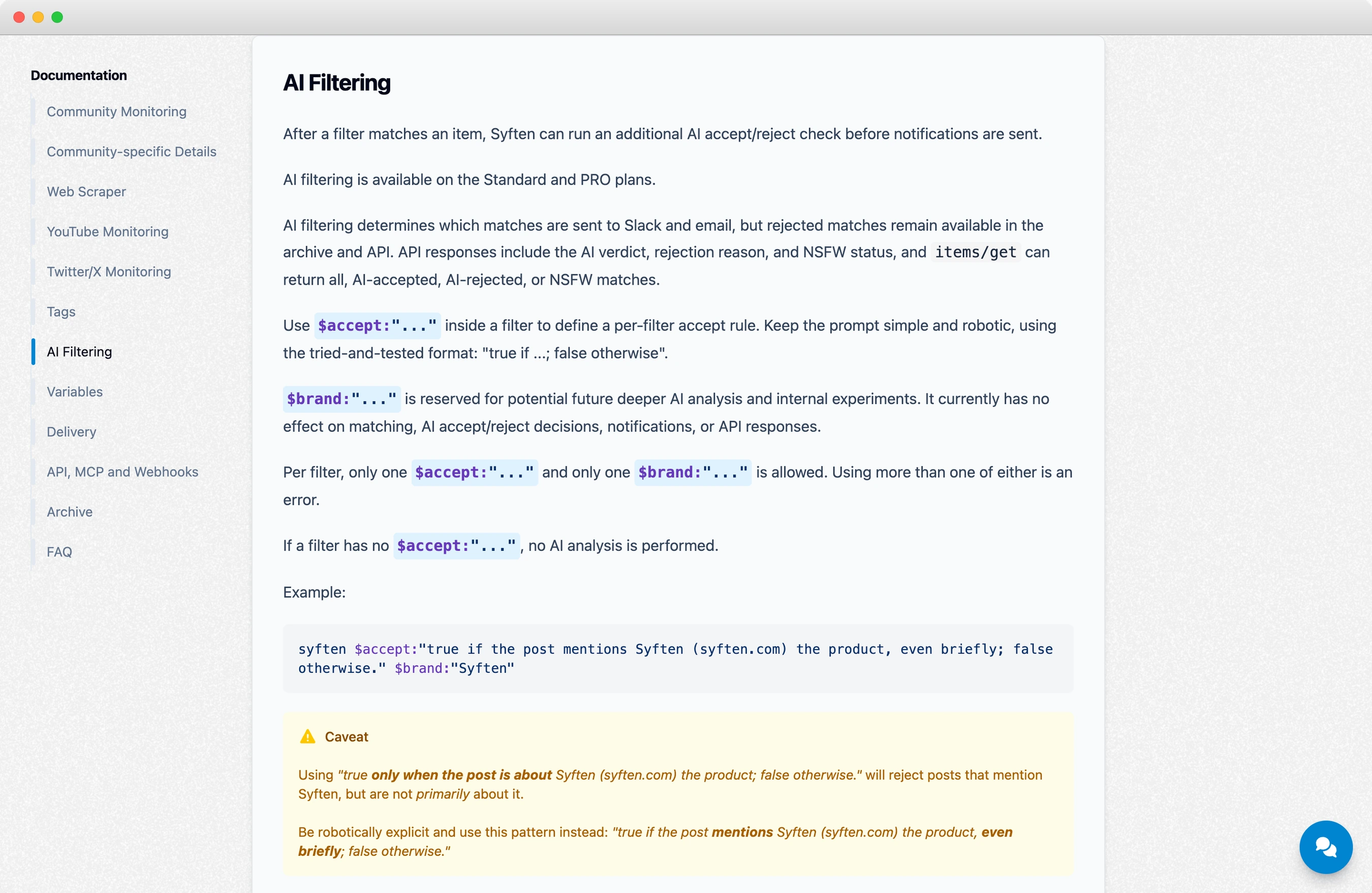
AI Filtering screens each match before it alerts you
AI Filtering adds a rule in plain words to a keyword filter, such as true if the post mentions your product 5. An AI check then accepts or rejects each match before it reaches Slack or email. Rejected matches stay in the archive, so a rule that is too strict loses nothing.
Verdict: the community monitor to start on, on the $49.95 plan, because AI filtering is what keeps the alerts useful. Skip it if you want research into what a community complains about, which it leaves to you.
Screaming Frog SEO Spider
Best for: checking what a crawler that runs no scripts can read on your site.
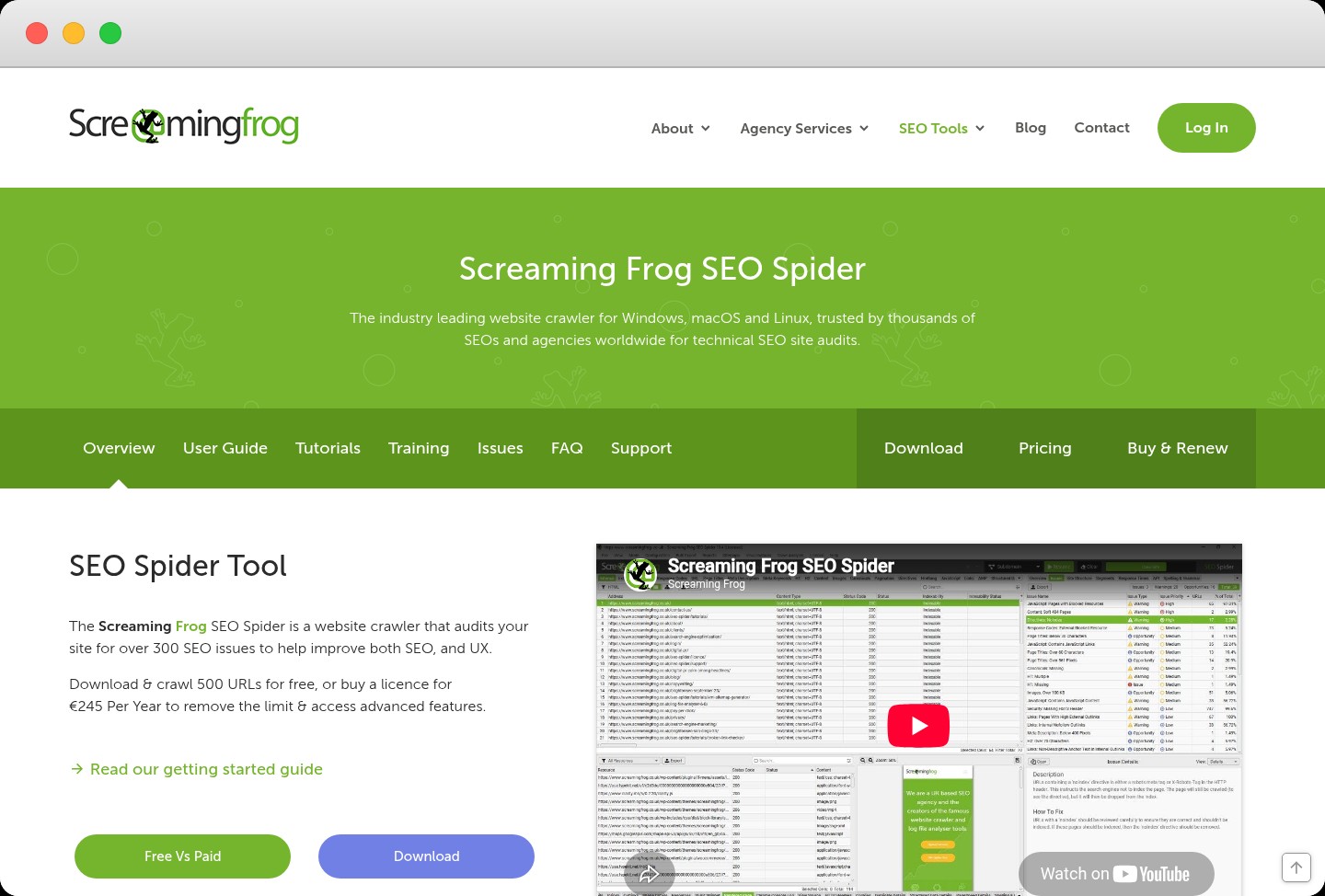
The SEO Spider is a desktop crawler for Windows, macOS and Linux. It walks your site the way a search bot does, reports broken links, redirects, titles and structured data errors, and can crawl with an AI crawler’s user agent 7.
For GEO the check that matters is JavaScript. Vercel’s study of AI crawler traffic reported that no major AI crawler renders it 8, so a pricing table that only appears after the scripts run is invisible to them.
The knock is that it audits and doesn’t watch. It runs on one computer when somebody starts it, and its reports assume a reader who knows crawl data.
Pricing
- Free version: crawls of up to 500 URLs.
- License: $279 a year per user (£199 or €245 on the local pages), with no URL limit and the advanced features, and discounts from five licenses.
Pros and cons
The SEO Spider answers the technical question better than anything else here, as long as somebody on your team reads crawl data:
Pros
- Shows which pages carry content only after JavaScript runs
- Crawls with an AI crawler’s user agent, or your own
- Validates structured data against Schema.org and Google’s rich results
Cons
- Desktop software, run by one person on one computer
- The free version stops at 500 URLs
- Reports assume a technical reader
What Reddit says
r/TechSEO
View threadScreaming Frog is way more realistic than Semrush. Semrush ‘sells’ false positives so it always ‘discover’ things to keep you engaged.
Sep 2026 r/localseo
View threadNot OP, but the free version exhausts those 500 URLs by including resource links (images, CSS, JS, etc.) in the crawl.
Sep 2026
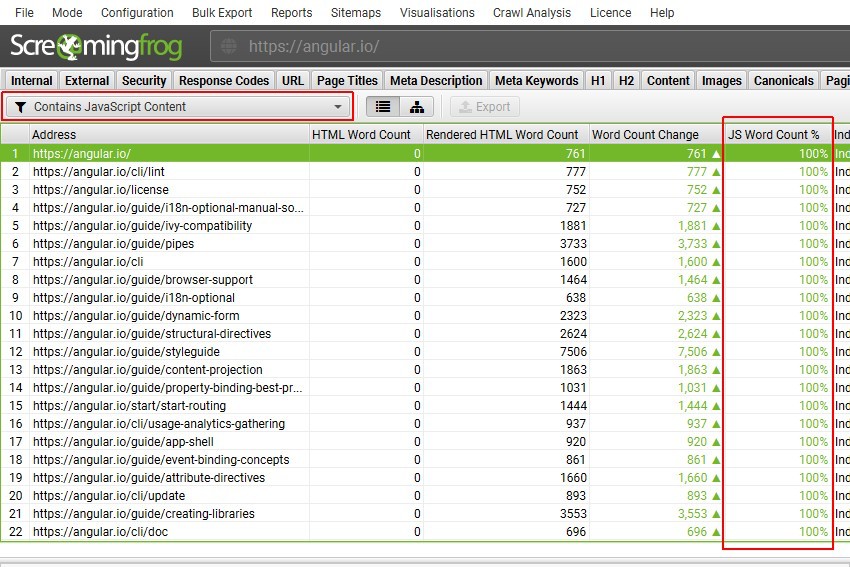
The JavaScript tab finds the pages a crawler reads as blank
Switch the crawl to JavaScript rendering and the JavaScript tab compares each page as the server sends it with the page after its scripts run. Its Contains JavaScript Content filter then shows the pages whose words only exist after the scripts run 7.
Verdict: the first audit to run on your own site, and the free version is enough to check your homepage, pricing and comparison pages. Skip the license if nobody on the team reads crawl data, and hand the free crawl’s export to whoever builds your site.
Schema App
Best for: schema markup across thousands of templated pages, managed for you.
Schema App is a managed schema markup platform. Its team maps your page types to Schema.org and a named success manager runs the setup. Its Highlighter then turns one tagged page into a template that deploys markup across every page with the same layout 9.
Google says AI Overviews and AI Mode have no additional technical requirements, and wants structured data to match the visible text 10. Markup helps an engine read a page, and it does nothing to get you named in the roundups and threads the engine cites.
Price and scale are the knock. There is no public price, a one-time setup fee and a 12-month minimum term 9.
Pricing
- Schema App Solution: a custom quote, set by your site’s size and the support you need.
- Setup: a one-time strategy and setup fee.
- Term: 12 months at minimum.
Pros and cons
Schema App takes markup off your developers’ plate, on enterprise terms:
Pros
- Deploys markup to thousands of templated pages from one tagged example
- A success manager runs the setup and the upkeep
- Markup updates when the page content changes, with no code
Cons
- No public pricing, plus a setup fee
- A 12-month minimum term
- Built for large sites, more than most SaaS marketing sites need
What G2 reviewers say about Schema App
What I really like about Schema App is how hands-off the whole experience was. They managed everything for us end-to-end, which took a lot of pressure off our internal teams.
Verified user in computer softwareDec 2025 Their product has been particularly useful for enterprise systems but probably out of scope for smaller businesses.
Senior digital content strategistNov 2023
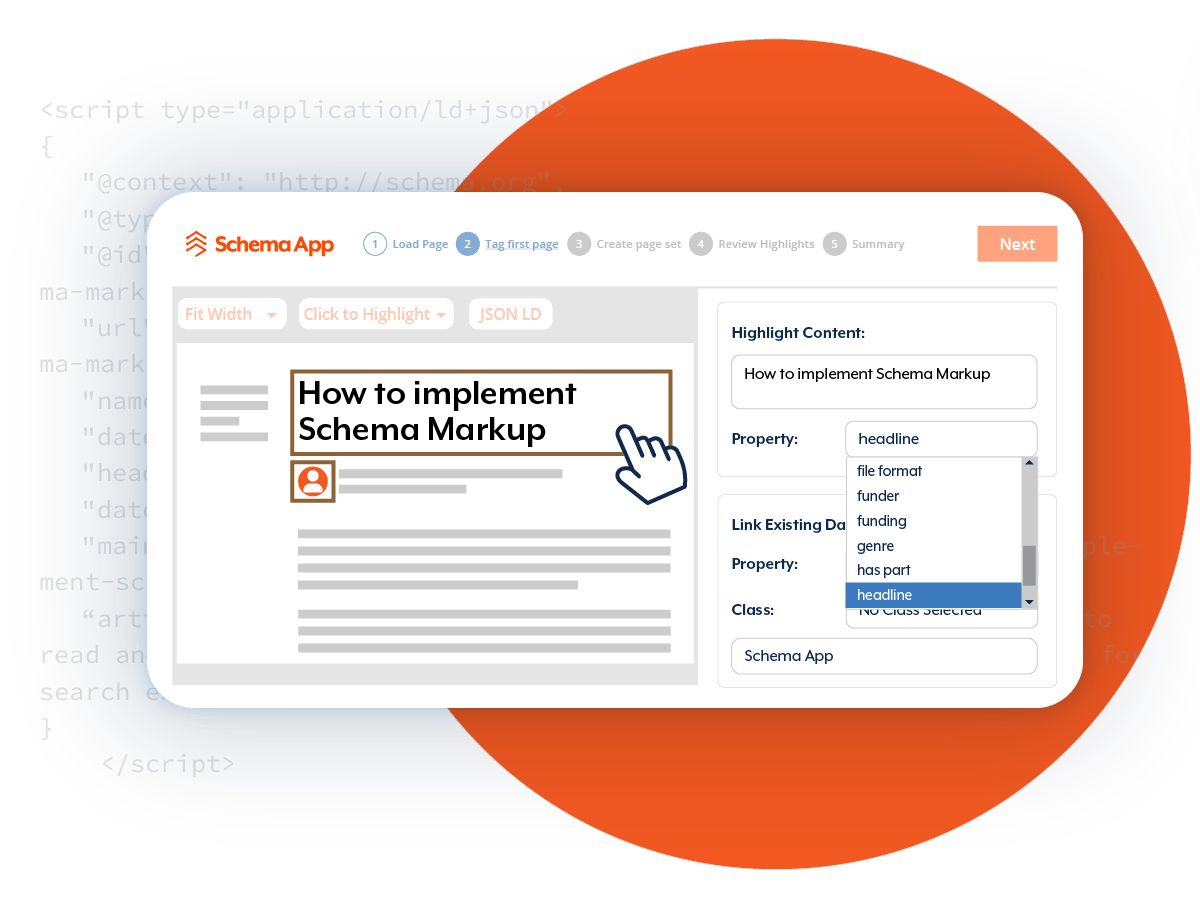
The Highlighter marks up a whole template at once
The Highlighter runs as a browser extension. You tag the parts of one page, such as the headline, the author and the product name, and define the pages that share its template by URL pattern 9. The Highlighter then generates and deploys the markup for all of them.
Verdict: right for a SaaS company with thousands of templated pages, such as integrations, locations or docs, and a team that wants markup handled for it. Skip it otherwise, because your developers can mark up a few dozen key pages and the SEO Spider will validate them.
Which Tool to Buy First
Buy for the job your team can’t do today, which is rarely the dashboard it likes best. Find your gap in one of these situations:
- No next step: you know your visibility and not where to work next. That is the job we built the Empact Panel for.
- No baseline yet: you can’t say how often AI answers name you. Start with Otterly.AI, on the plan that fits 50 prompts.
- Unknown sources: you have a number but not the pages behind it. Run Ahrefs Brand Radar on your two strongest rivals first.
- Roundups to defend: you are already named on a few. Brand24 tells you the week one of them changes.
- Buyers on Reddit: your buyers ask for tools in threads and forums. Use Syften on the Standard plan.
- JavaScript pages: your pricing or comparison pages only fill in after scripts run. Crawl them with the free SEO Spider first.
- Templated pages: your site generates thousands of pages from a few templates. Schema App is built for that.
If the gap you suspect is the listicles, start by seeing which cited pages mention your rivals but not you. The AI Citation Gap Report runs a free preview of that search from your website, and we run the full agent for our partners:
What We Recommend for Your GEO Stack
Keep the tool your team already uses if it does its job. We don’t mind which tracker you log into. For every partner, Empact Partners sets up an Empact Panel, and it’s included in every partnership. The score you already watch then comes with the weekly reads that say what to do about it.
Our GEO consultants would start where your Panel points. If it reads like this partner’s, that means the Reddit threads and listicles your rivals hold and you don’t, beginning with the ones the answers cite most often. Every partnership opens with an audit and a roadmap, which sets that work beside fixes to your own site and the Reddit threads your buyers read. The work includes:
- An audit and a roadmap first, not a content calendar
- An Empact Panel asking ChatGPT, Google AI Mode and Claude your buyers’ questions, included in the partnership
- Fixes to your own site, so AI engines can read each key page and quote it
- Your product named on the listicles AI answers keep citing, with every placement on record and compared weekly with the AI answers
- Reddit threads and replies written to help the person asking, with a weekly report on the threads
- Ongoing reports on your visibility, citations, community and content performance, with a first step for every recommendation
If you’d rather start on the listicles yourself, the playbook walks you through winning a place on the pages ChatGPT and Google AI Mode cite. It begins with the ones that leave you out:
Judge each of these tools on its trial. Judge the GEO work over quarters, because AI search work takes months before the momentum shows.
Frequently Asked Questions
How do we get an Empact Panel?
Every Empact partner gets one, and it’s included in the partnership. We set it up around your buyer questions and ask them in ChatGPT, Google AI Mode and Claude every week. Every answer, citation and competitor is kept from the first week on. If your team likes the tracker it already has, keep it. The Panel answers a different question, what to work on next, and you can read the two side by side.
Why did Empact Partners build its own GEO software?
Because the trackers we tried stopped at a score. They told a partner how often ChatGPT, Google AI Mode and Claude named it, and nothing about why a rival came first or which pages to win next.
We needed that answer every week for more than a dozen partners, so we built the Empact Panel around it. It runs on each partner’s own buyer questions and keeps every answer, citation and competitor, so the work we recommend starts from what the engines said about your category.
Can we keep our current GEO tool and still get an Empact Panel?
Yes. Plenty of teams keep the tracker they already report from, and we don’t mind which one it is. The Panel sits beside it.
Your tracker keeps the score your board already knows, and the Panel shows what sits behind that score and which listicles and threads to work on next. Neither depends on the other, so nothing in your current reporting has to change on day one. Read the two side by side for a few weeks and you’ll see which one changes what your team does on Monday.
Do we need GEO software, or can we check ChatGPT by hand?
You can check by hand for a week, and it will mislead you. The same question gets different answers from one run to the next and from one engine to another, so a few manual checks show noise. Software repeats the same questions on a schedule and stores what each engine said, and that history is what makes a change from one month to the next believable. Hand checks still help you read what the answers say about you.
How many prompts should we track?
Fifty to a hundred per market is a sound start for most SaaS categories, written from the problems your buyers describe and the rivals they compare you with. Otterly’s own guidance sits in that range. Its stability study found that tracking 100 prompts daily for 30 days cut the swing in brand coverage by about 73% compared with 10 1. Once the set is live, change it rarely, because every edit breaks the trend line.
Which AI engines should a B2B SaaS company track?
We track ChatGPT, Google AI Mode and Claude for our partners. Check which engines a tool covers on its cheapest plan before you buy, since several keep Claude for higher tiers or charge more per Claude answer. Adding engines multiplies the cost of every prompt, so more questions on fewer engines usually beats a thin set everywhere.
What replaced GummySearch for Reddit monitoring?
GummySearch closed at the end of November 2025 6. For alerts, Syften covers Reddit alongside forums and Slack communities, and F5Bot is a free option for Reddit, Hacker News and Lobsters if you only need keyword emails. Neither does GummySearch’s audience research, so plan for a person to read the threads and decide which ones deserve an answer.
Does schema markup help us appear in AI answers?
Schema helps an engine read your pages, and it won’t earn you a recommendation on its own. Google’s documentation says AI Overviews and AI Mode carry no extra technical requirements, and asks that structured data match the visible text on the page 10. Check first for content that only appears after JavaScript runs, which AI crawlers don’t execute 8, then mark up your key page types correctly.
How much should we budget for a GEO tool stack?
A first stack can run under $100 a month with Otterly’s Lite plan at $29, Syften’s Entry plan at $29.95 and the free SEO Spider. The cost is fewer prompts than Otterly advises and no AI filtering on Syften. A fuller setup with Otterly Standard, Brand Radar’s index and Syften Standard comes to about $438 a month before Brand24 or Schema App. The bigger cost is the time somebody spends acting on what the tools find.
How long before GEO work shows in the numbers?
Plan in quarters. AI search work takes months before the momentum shows, because the answers swing from week to week and the engines change what they cite at their own pace. A single new mention can show up in the next weekly read. A trend you can report to a board needs the longer window, so judge the GEO results on a quarter and each tool on its trial.
Sources (10)
- OtterlyAI, "Pricing" (2026)↩1↩2↩3
- Ahrefs, "AI visibility index" (2026)↩1↩2↩3
- Ahrefs, "Brand Radar" (2026)↩1and Pricing, 2026.
- Brand24, "Pricing and plans" (2026)↩1↩2↩3
- Syften, "Pricing" (2026)↩1↩2and Documentation, 2026.
- GummySearch, "for Reddit" (2025)↩1↩2
- Screaming Frog, "SEO Spider" (2026)↩1↩2and How to crawl JavaScript websites, 2026.
- Vercel, "The rise of the AI crawler" (2024)↩1↩2
- Schema App, "Pricing" (2026)↩1↩2↩3and Schema App Highlighter, 2026.
- Google Search Central, "AI features and your website" (2025)↩1↩2
Keep reading
GEO The 5 Best AI Visibility Tracking Tools, Priced and Reviewed
Five AI visibility trackers, each answering a different question, with live prices, G2 ratings and what users say, and how to choose one.
GEO Should You Fund Your Website, Mentions or Reddit First?
Find the gap in your website, external mentions or user discussions, then choose the next job for your SaaS team.

GEO Why AI Recommends Your Competitors and What to Fix
Find gaps in AI recommendations, choose which pages and mentions to fix, and see how Empact helps your team act.